
[PODCAST] Inside Netvvrk with Painter Chris Moss
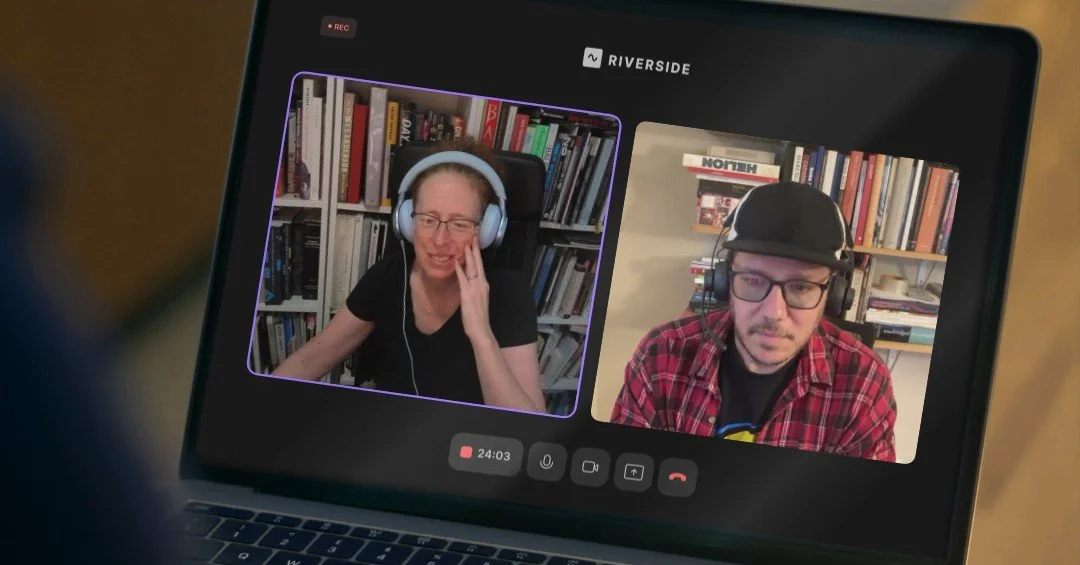
Left Paddy Johnson, Right Chris Moss
This week on the Art Problems podcast interview series "Inside Netvvrk", I'm wrapping up the series with Chris Moss, a painter and the artist advisor who leads all of Netvvrk's studio critiques.
Chris has been with Netvvrk for years. He shares what it's like to go from being completely stuck to organizing a neighborhood studio crawl that brought hundreds of people through his door. We talk about why COVID isolation finally pushed him to find a solution, how he went from zero shows to curating exhibitions with himself in them, and why self-worth is one of the biggest intangible benefits of investing in your career.
Chris also gets into why regular critique with other artists matters more than almost anything else for making better work.
If you've been feeling stuck or isolated in your practice, Chris's focus on community and taking action—even when it feels uncomfortable—might be exactly what you need to hear.
[PODCAST] Inside Netvvrk with Multidisciplinary Artist Brent Showalter
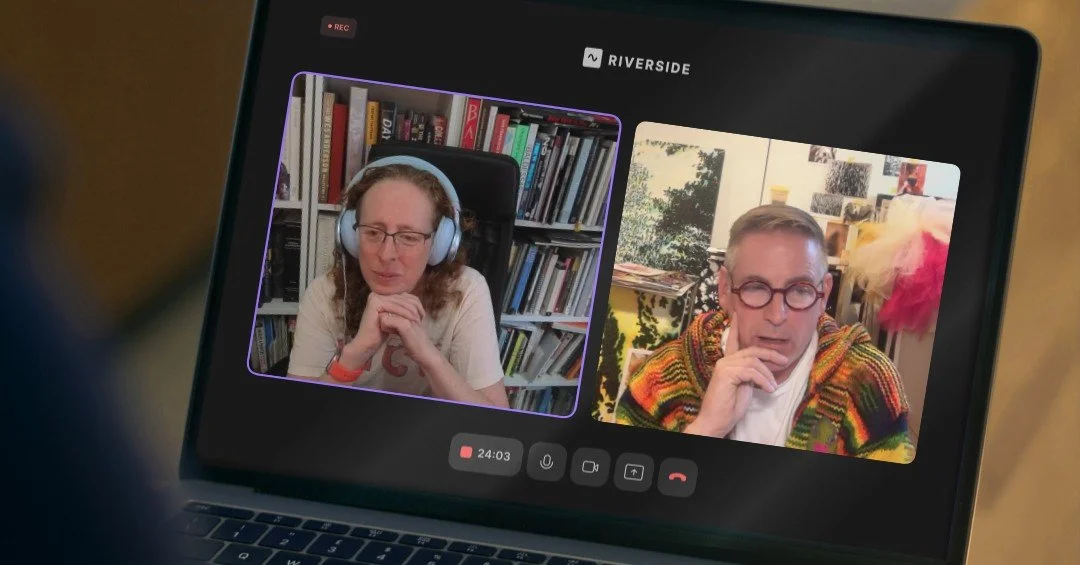
Left Paddy Johnson, Right Brent Showalter
This week on the Art Problems podcast interview series "Inside Netvvrk", I'm talking with Brent Showalter, a multidisciplinary artist whose brilliantly colored paintings and photographs transform layered compositions of color and shape into vibrating surfaces.
Brent runs multiple businesses and brings that same strategic mindset to his art practice. In doing so, he's able to devote more time to his art. We talk about how his accountability group helped him finally organize his entire archive, and what it takes to feel confident when opportunity knocks—whether that's the director of the Guggenheim walking into your studio or an Instagram comment from a curator.
Brent also shares how that casual comment turned into a curated opportunity in 24 hours—because he had everything ready to go.
If you've been wondering whether Netvvrk is worth the investment, this conversation will help. It shows what happens when you stop reinventing the wheel and start using the tools that already work.
[PODCAST] Inside Netvvrk with Abstract Painter Ann Marie Auricchio
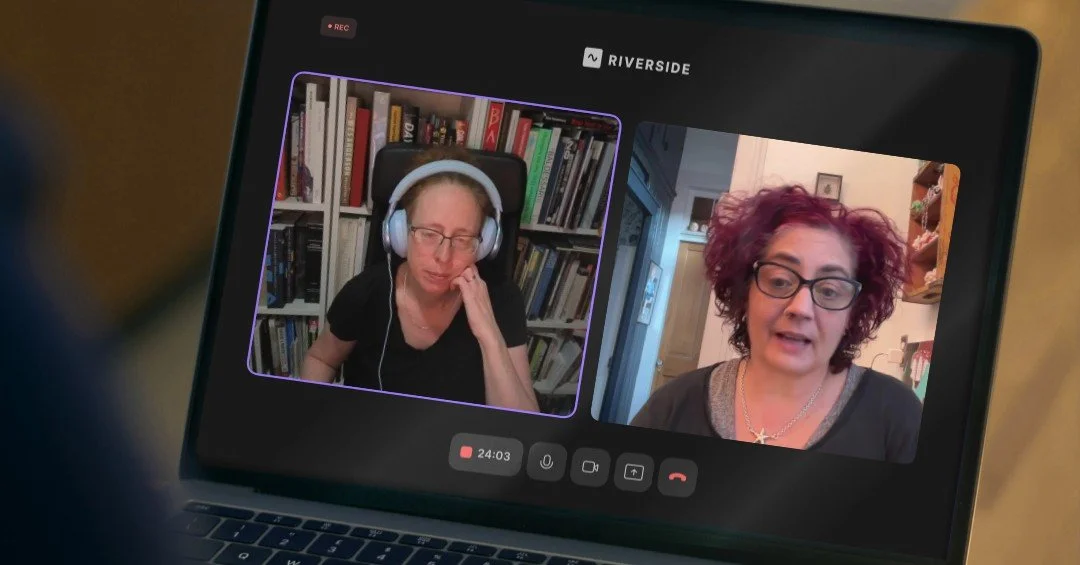
Left Paddy Johnson, Right Ann Marie Auricchio
This week on the Art Problems podcast interview series “Inside Netvvrk”, I'm talking with Ann Marie Auricchio, an abstract painter who creates work at the intersection of psychological and physical experiences.
Ann Marie shares what it's like to restart your art career after 25 years in another profession. She talks about why having all your materials ready isn't enough if you don't know how to use them, and how a shoulder injury became the perfect time to invest in herself.
We get into how she went from feeling stuck and isolated in New Orleans to landing her first museum solo show and working with multiple galleries. She also explains how writing exhibition proposals with other Netvvrk members led to actual acceptances—and taught her when to turn down opportunities that don't financially make sense.
We also talk about researching institutions by looking at other artists' CVs and why community matters even when people can be annoying.
If you're restarting your career or feeling isolated in your practice, this conversation will help. It shows what's possible when you get your assets in order and find your people.
[PODCAST] Inside Netvvrk with Data Artist Laurie Frick
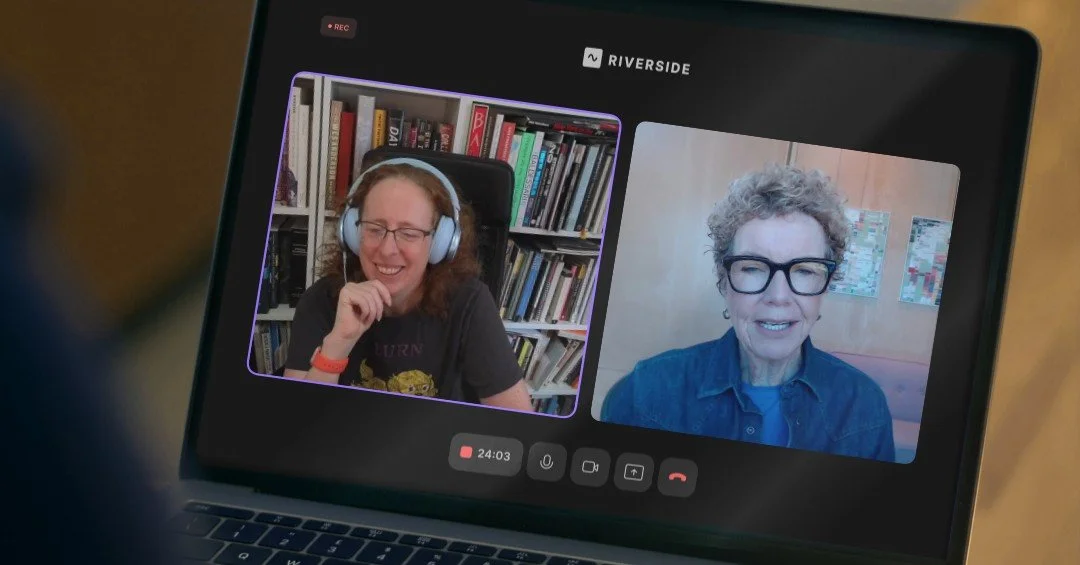
Left Paddy Johnson, Right Laurie Frick
This week I'm launching 'Inside Netvvrk,' a new interview series with Netvvrk members. First up is Laurie Frick, a data artist and one of Netvvrk's founding members.
In this conversation, we talked about what it's really like to invest in your career when you're already mid-career. Laurie doesn't sugarcoat it: Netvvrk isn't cheap, and you need to treat your career like it's worth investing in. But she also shares what changed when she made that commitment—going from feeling stuck in public art commissions to now having four galleries and selling all the work she makes.
We talk about the small group of artists who transformed each other's fellowship applications into something extraordinary, what it takes to actually be vulnerable with other artists, and why a community on Zoom can be just as real as painters meeting in a bar.
If you've ever wondered whether coaching or community membership is worth the investment—especially if you're already established—this conversation shows what happens when you stop going it alone.
[PODCAST] Paddy Tells All: How Netvvrk Actually Works
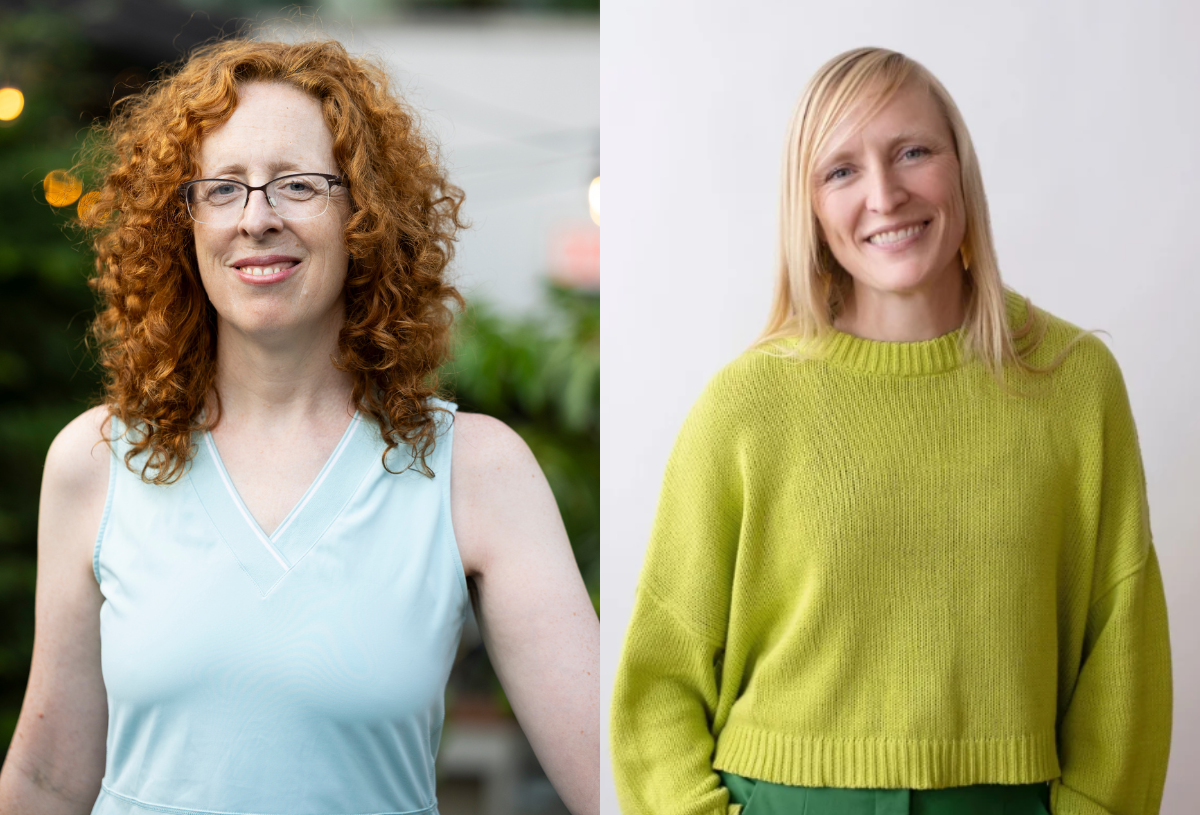
Left Paddy Johnson, Right Hannah Cole
This week, accountant and artist Hannah Cole interviews me. As an artist who isn't (yet) a Netvvrk member, she had a lot of questions about how it helps mid-career visual artists.
Who is it for? How does it work? What makes it different from a course? Do you really need it?
We talk about why I started Netvvrk after years of cobbling together income from adjunct teaching and speaking fees, and how those early artist statement classes revealed a bigger problem—artists needed ongoing support and community, not just one-off solutions.
I share how the membership works, from the positions module that shows you exactly where you are in your career to the accountability groups that make sure you actually do the work. We also get into member stories—like the artist who went from applying to juried shows to showing at invite-only shows all the time, and another who landed a show at a blue-chip gallery.
If you've ever felt like you're working all the time but stuck in the same place, this conversation breaks down what's possible when you have the right structure and support.
![[PODCAST] A New Source of Opportunities: An interview with Eric Shiner of Powerhouse Arts](https://images.squarespace-cdn.com/content/v1/68cde45f3d88ea3fe7e6e18d/1763133282349-2ONA7YBVV6Y5O84PJB0R/Blogpost+%281%29.png)
[PODCAST] A New Source of Opportunities: An interview with Eric Shiner of Powerhouse Arts
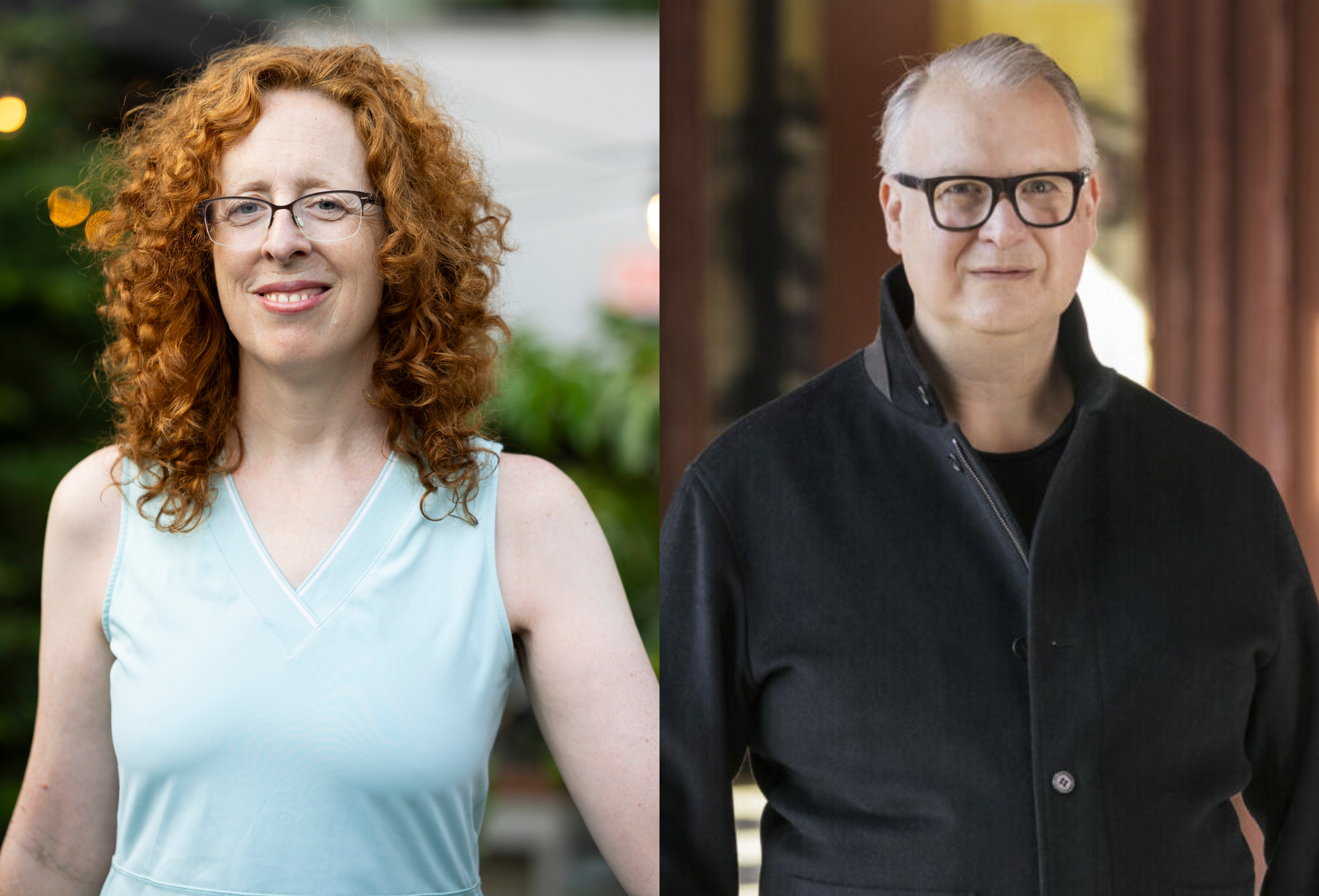
Left Paddy Johnson, Right Eric Shiner
Eric Shiner, President of Powerhouse Arts joins the podcast to give artists the skinny on this new organization. This 170,000 square-foot nonprofit in Brooklyn's Gowanus neighborhood is fast becoming one of the most significant resources for artists in New York City.
Eric walks me through Powerhouse's seven fabrication workshops (ceramics, printmaking, textiles, wood, metal, and more), their artist subsidy program that makes these resources financially accessible, and their new artist residency program.
We also talk about how Powerhouse is expanding into exhibitions and performing arts with affordable ticket prices, and why they're supporting Fall of Freedom—a nationwide protest defending creative expression.
If you've been struggling to find affordable fabrication space or access to specialized equipment, this conversation will give you tangible options and genuine hope.
Relevant Links:
![[PODCAST] When and How to Hire Help for Your Studio](https://images.squarespace-cdn.com/content/v1/68cde45f3d88ea3fe7e6e18d/1763133204305-KCDTEEKFT3XG7JWYGPIZ/Screenshot+2025-11-07+095743.png)
[PODCAST] When and How to Hire Help for Your Studio
One of the most common challenges artists face is knowing when—and how—to hire help for their practice. This week, I'm breaking down the practicalities of hiring: from determining if you're ready, to figuring out what you can afford to pay, to managing assistants effectively.
I cover the key tipping points that signal it's time to bring on help, the difference between contractors, assistants, and coaches, and why feeling overwhelmed doesn't always mean you need to hire someone. We also discuss W.A.G.E.'s fee calculator as a concrete tool for determining fair pay, why underpaying assistants creates more problems than it solves, and how Standard Operating Procedures (SOPs) can make working with help much smoother.
Plus, I explain how coaching can bridge the gap between doing everything yourself and hiring expensive consultants—helping you work smarter before you invest in working more. If you're struggling with time management, turning down opportunities, or can't meet deadlines without help, this episode offers practical guidance for making your first hire or improving how you work with the people already supporting your practice.
Relevant Links:
![[PODCAST] The Cancer Episode with Sculptor John Powers](https://images.squarespace-cdn.com/content/v1/68cde45f3d88ea3fe7e6e18d/1763129888708-37B99PYIPH2FX2BI5KQA/Blogpost.png)
[PODCAST] The Cancer Episode with Sculptor John Powers
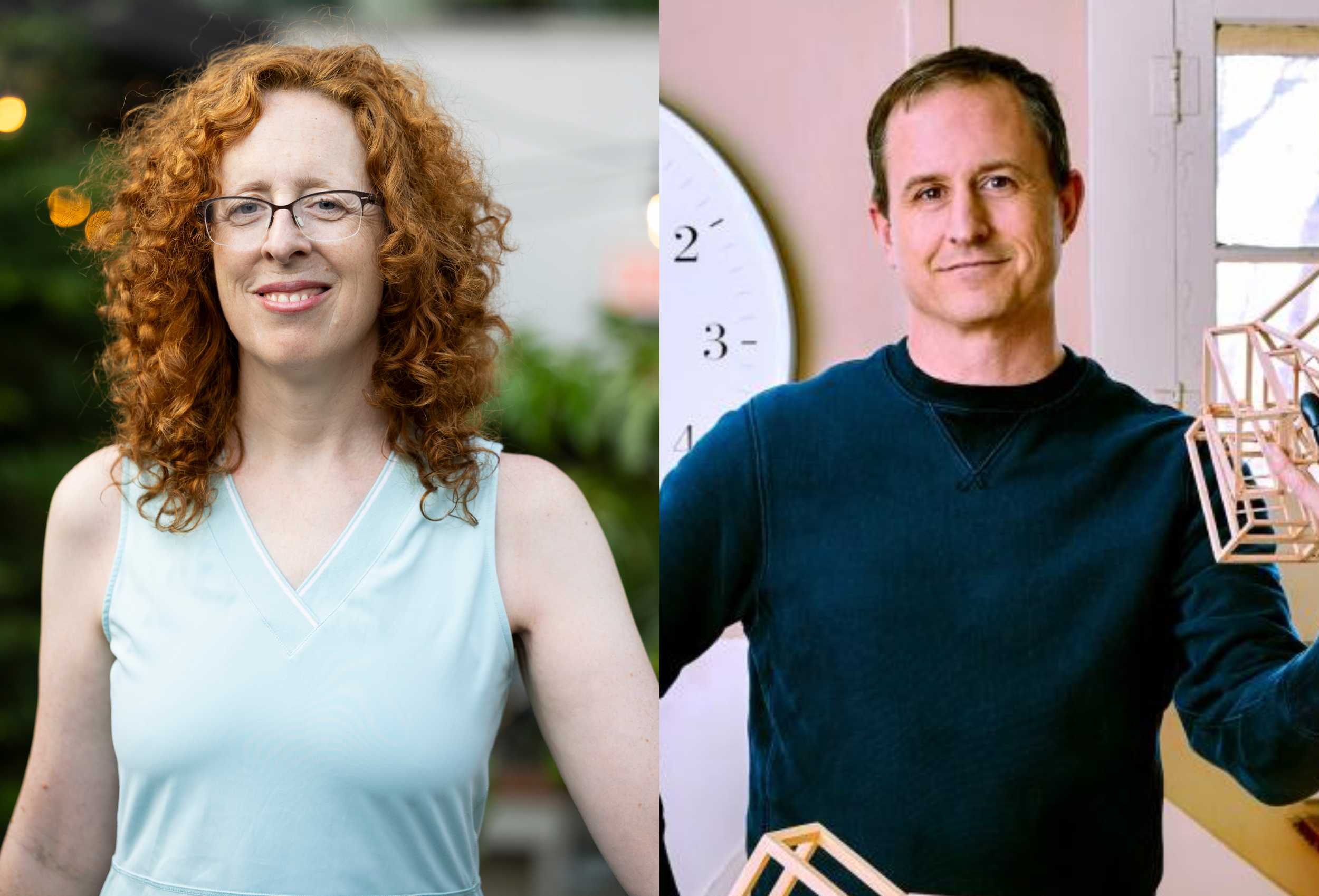
Left Paddy Johnson, Right John Powers
In this podcast we’re talking about how health events affect the lives of artists. Sculptor John Powers joins me as we share our experiences - his traumatic hand injury and subsequent cancer diagnosis, and my own recent double mastectomy.
We dig into the specific challenges artists face when medical crises threaten the tools of our trade, how we navigate the US healthcare system, and the mental strategies that help us maintain morale when everything feels out of control. We also explore the practical realities: phantom limb pain, nerve regeneration, the importance of finding the right surgeon, and how artistic skills - like explaining complex ideas and self-entertaining in solitude - translate surprisingly well to being a patient.
Medical crises are one of the top reasons artists in our community need to step back from their work, yet we rarely discuss how to navigate them. This podcast fills that need.
Relevant Links:
![[PODCAST] Is the Era of Art Fair Spectacle Over?](https://images.squarespace-cdn.com/content/v1/68cde45f3d88ea3fe7e6e18d/1758323898021-WJ1870N7HAFT4K9037G9/image+%2823%29.png)
[PODCAST] Is the Era of Art Fair Spectacle Over?
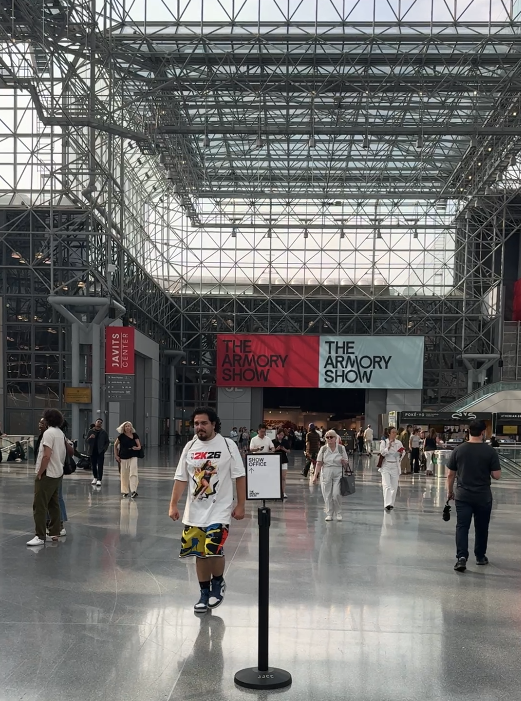
The Armory Show, 2025
VVrkshop founder Paddy Johnson and artist William Powhida dive into their impressions of the 2025 Armory Art Fair in New York. In this episode, we explore how Frieze's new ownership has changed the fair's feel, from stricter security to the notable absence of mega galleries like Hauser & Wirth and Gagosian.
We break down the numbers - more than half of 2024's exhibitors didn't return, LA galleries dropped by 26%, and smaller works dominated booths as galleries adapted to market realities. The conversation covers standout pieces that caught our attention, from Nick Farhi's provocative glory hole installation at Europa to Nikita Gale's politically charged "Interceptor" barricade at 56 Henry.
We also dig into emerging art trends, including the rise of "art history textbook painting" where artists render historical styles in abstract brushstrokes, and discuss the troubling vacuum in art criticism. The episode touches on the political climate's impact on art-making and whether we're seeing the end of an era for large-scale art fair presentations.
Relevant Links:
Tim Van Laere Gallery (Rinus Van de Velde)
Victoria Miro (Doron Langberg, Flora Yukhnovich)
Peter Blum Gallery (Marha Tuttle)
Europa (Nick Farhi)
56 Henry (Nikita Gale)
Yancey Richardson Gallery (Marilyn Minter)
Corbett vs. Dempsey (Cauleen Smith)
What If The World Gallery (Mia Chaplin)
Uffner & Lui (Talia Levitt)
Marinaro (Ever Baldwin)
Hess Flatow (Emma Safir)
Dastan Gallery (Tehran artists)
P40D Gallery (Piper Bangs)
Anton Kern Gallery (David Shrigley)
James Cohan (Simon Evans)
[PODCAST] Why Art Speak Persists and How to Ditch It
What exactly is "art speak" and why do artists continue to use it when we all agree it’s creates a poor reading experience? In this podcast, I break down the inflated language that clutters artist statements—from "liminal" and "corporeal" to meaningless spatial metaphors that make work sound more complex than it is.
Drawing on Alix Rule and David Levine's landmark essay "International Art English," I explore why vague academic language emerged from 1970s French poststructuralist influence and why it's stuck around for nearly 50 years. Plus, we discuss why clarity can become your competitive advantage as AI changes how we evaluate written materials and grant competitions intensify.
RELEVANT LINKS:
"International Art English" by Alix Rule and David Levine (2012)
Free Masterclass: "How to Build an Art Career When Traditional Paths Fail" - July 22nd, 7:30 PM EST Netvvrk membership: [SIGN UP HERE]
[PODCAST] Position is Power
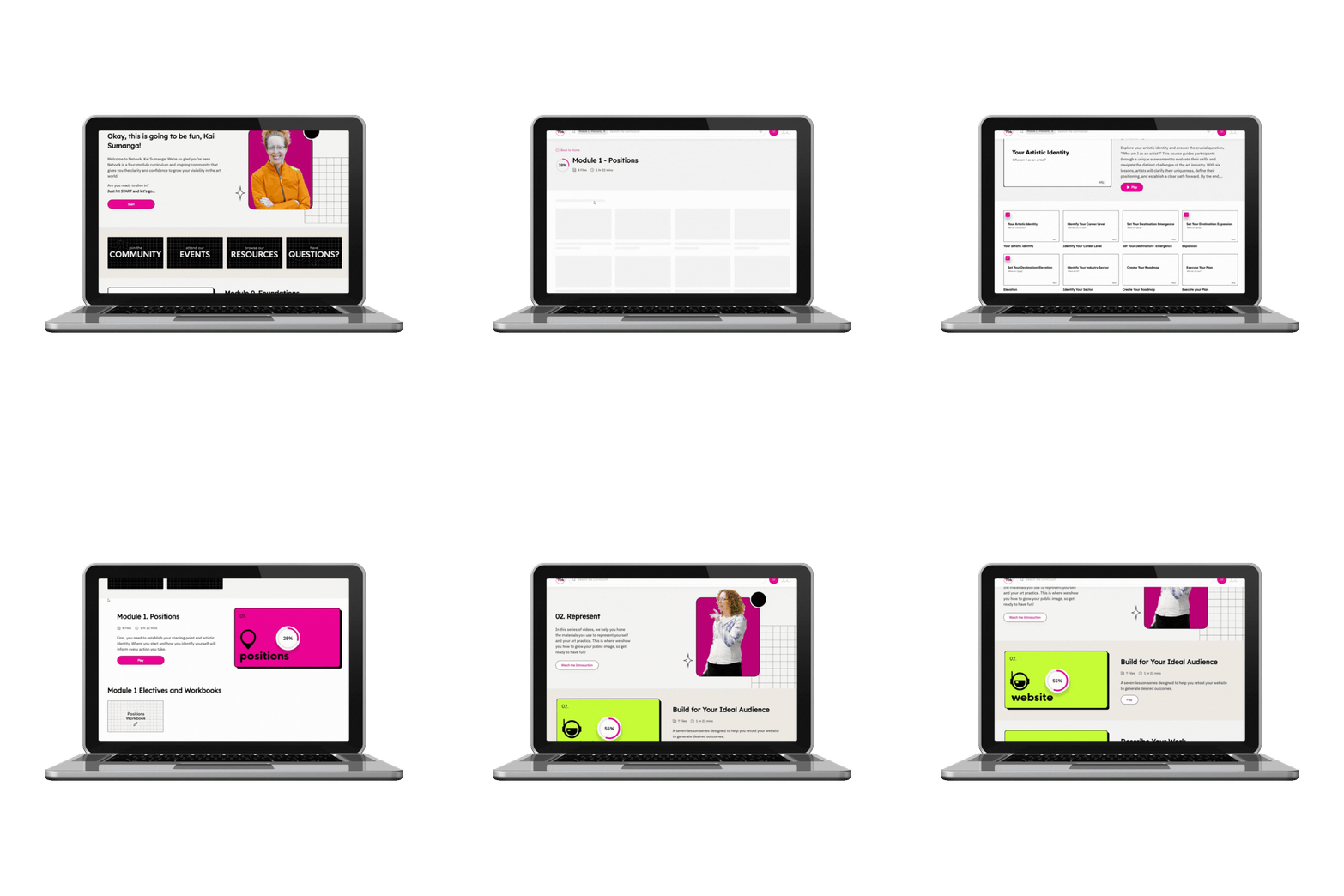
New Netvvrk Hub
The Art Problems Podcast is back after a two-month hiatus — and I’m back announcing the biggest update in Netvvrk membership history.
The economy’s rough. The art world’s uncertain.
And I’m not pretending otherwise.
But that does mean that focusing on your career now can give you a leg up.
This episode is about giving yourself that advantage by finding your place in the art world — and actually moving forward.
[PODCAST] Art Problems: Goal Setting Is Not the Same as a Deadline
Every artist needs a visibility plan. But if you're anything like me, you may find following a plan INSANELY difficult.
There are too many variables at play to stick to a plan.
Well, when you establish your starting point, you can set goals, and creating a plan with the flexibility needed to achieve said goals becomes a lot easier.
On today's podcast, I talk about the baseline metrics you need to determine so you can set realistic goals and timelines.
I give you the outline of what we're doing inside Netvvrk so you can follow along even if you're not a member, but I also give you the code to join at the annual level during our Vantablack Friday sale and save $100, through Monday, December 2nd. You want access to our workbooks and yearly planning that can transform your career.
![[PODCAST] Art Problems: What Happens When Artists Can Do Anything They Want](https://images.squarespace-cdn.com/content/v1/68cde45f3d88ea3fe7e6e18d/1758323897936-EMSYITTF0RQPPBAHGB4J/Riverside-Snapshot+%282%29.png)
[PODCAST] Art Problems: What Happens When Artists Can Do Anything They Want
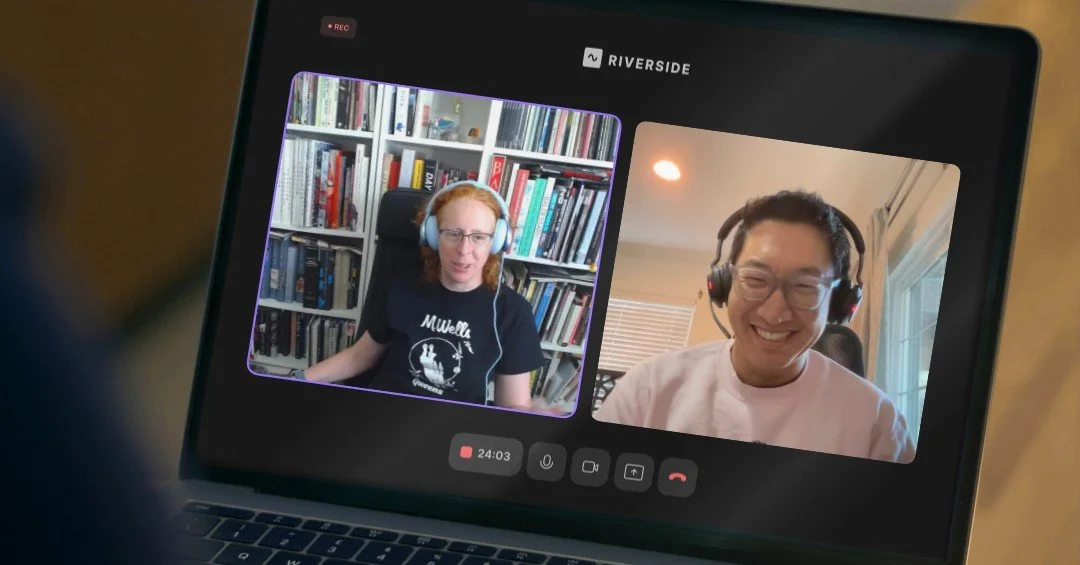
What would launching an exhibition look like if you only had to focus on your art? That's the dream Tiger Strikes Asteroid makes possible. As founder Alex Paik explains in this episode of Art Problems, TSA handles everything from taxes to website maintenance across its five locations, allowing artists to concentrate solely on creating and exhibiting their work.
In this episode, Paik explains how TSA's network of artist-run spaces creates alternatives to market-driven galleries, fosters authentic community across five cities, and helps artists build rich, fulfilling lives through meaningful connections and creative autonomy.
Paik's plain-spoken wisdom about community and organizing provides a salve to an otherwise market-focused art industry.
Plus, an important plug: TSA is currently fundraising to support its mission. You can help by purchasing their newly released artist-designed T-shirts and sweatshirts or becoming a monthly member through Patreon, starting at just $5. https://www.tigerstrikesasteroid.com/
[PODCAST] Art Problems: Can Museum Matchmaking Work For You?
Left Paddy Johnson, Right Michael Darling
Ever wonder how to get your art into museum collections? Museum Exchange co-founder Michael Darling joins me to discuss how his company connects artwork with museums that want it.
Museum Exchange functions like a matchmaking service - museums write proposals for artwork they want, and donors choose the best fit. It's working: small regional museums are building collections, challenging works are finding homes, and donors and institutions are getting what they need.
Listen as Darling, and I get into the thick of it and learn more about a process that might work for you or someone you know!
[PODCAST] Art Problems: Who Is Carrie Scott?
Left, Paddy Johnson, Right, Carrie Scott
Is any question more vexing to artists than, "What do you do?"
No, because it's impossible to answer!
This week on the podcast, I turned the tables and asked curator, consultant, and media personality Carrie Scott the same questions she asks artists in her interviews.
What do you do? Who do you make work for? What made you decide to pursue a career in the arts?
In asking these questions, our conversation touches on Seen, her newest membership for collectors and artists, whether you can feel art, and who gets to monopolize parenthood conversations in the art world.
PS Carrie Scott offers Art Problems listeners 20% off her consulting services for artists with the code 20off. You can get that when you join her membership, Seen!
[PODCAST] Art Problems: How to Manage an Art Career When You’re Over 60
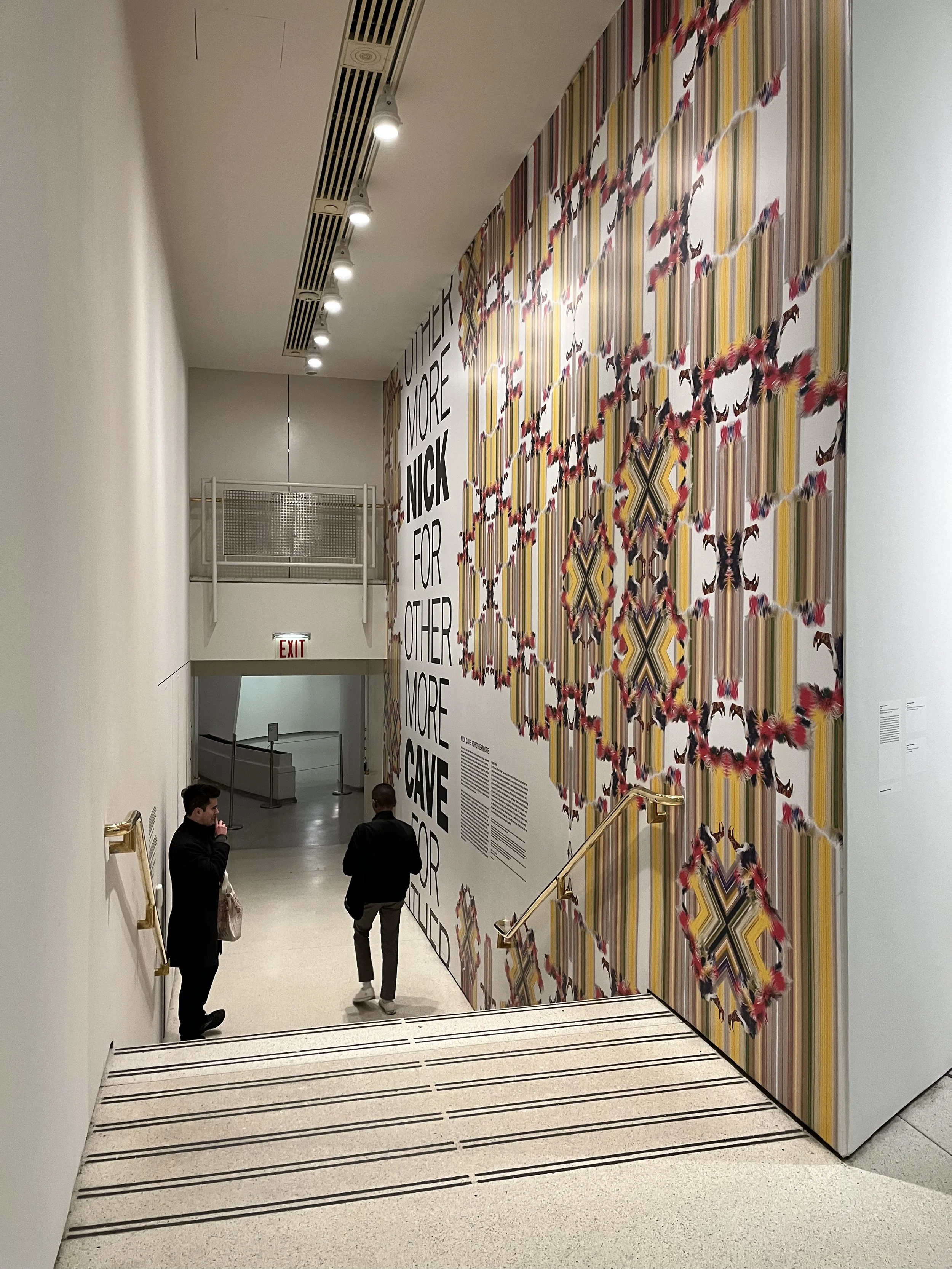
Does advanced age feel more like a liability than a strength? Welcome to the art world, which can suuuuck for mid-career artists.
Ageism in the art world is more than just a problem—it's a barrier that can feel insurmountable, especially for women artists over 60. (And yes, while it affects everyone, the impact on women is particularly harsh.)
I'm not going to pretend ageism doesn't exist. I'm not going to pretend ageism doesn't exist. It does, and it will impact you. However, how you view your age will determine the extent of its effects on your career. YOU are not beholden to another person's preconceptions. Your age does not have to be a limitation. It is a strength waiting to be unleashed.
I'm tackling the issue head-on this week on the Art Problems podcast by sharing seven game-changing tips that will help you:
Reframe your mindset and embrace your ambition
Master essential skills for today's art world
Transform your studio practice to work with you, not against you
Consider these tips a toolkit for visibility, success, and artistic fulfillment in your 60s and beyond.
The best part? Many of these strategies are just as powerful for younger artists. It's never too early (or too late) to take control of your art career!
Relevant links:
How to Master Technology When You Hate Technology
Lorna Simpson interviewed by Dean Baquet in T Magazine
Every Nicole Eisenman Picture Tells a Story, Ian Parker, The New Yorker
https://www.newyorker.com/magazine/2021/03/01/every-nicole-eisenman-picture-tells-a-story
[PODCAST] Art Problems: Are You Using A.I. Enough?
The problem most artists don't know they have with A.I.? They aren't using it enough.
If you don't use it, you won't know all it can do to help you.
But you also won't be aware of its limitations.
In this podcast, I walk you through exactly how AI can help you save time in the studio, and when you need to switch out the AI for an expert.
Here's the spoiler alert on what AI can and can't do: It's great for agendas and basic writing and editing. I use it almost every day and it helps me enormously.
But it does have limitations. It can't fill in the information you don't give it, and it won't identify specific problems unless you ask it to do so.
As a means of answering those AI limitations, I've created strategic email scripts that artists can use to get better shows, additional funding, and even acquisitions. The scripts come in three separate documents - one for galleries, one for museums, and one for Instagram - and retail at $129 or $49 for the gallery scripts alone. But for a limited time, I'm offering 15% off. All you gotta do to get the coupon is fill in your information when the pop up appears.
Happy listening -- and Netvvrking!
[PODCAST] Art Problems: Post Hurricane Helene with Artist and Accountant Hannah Cole
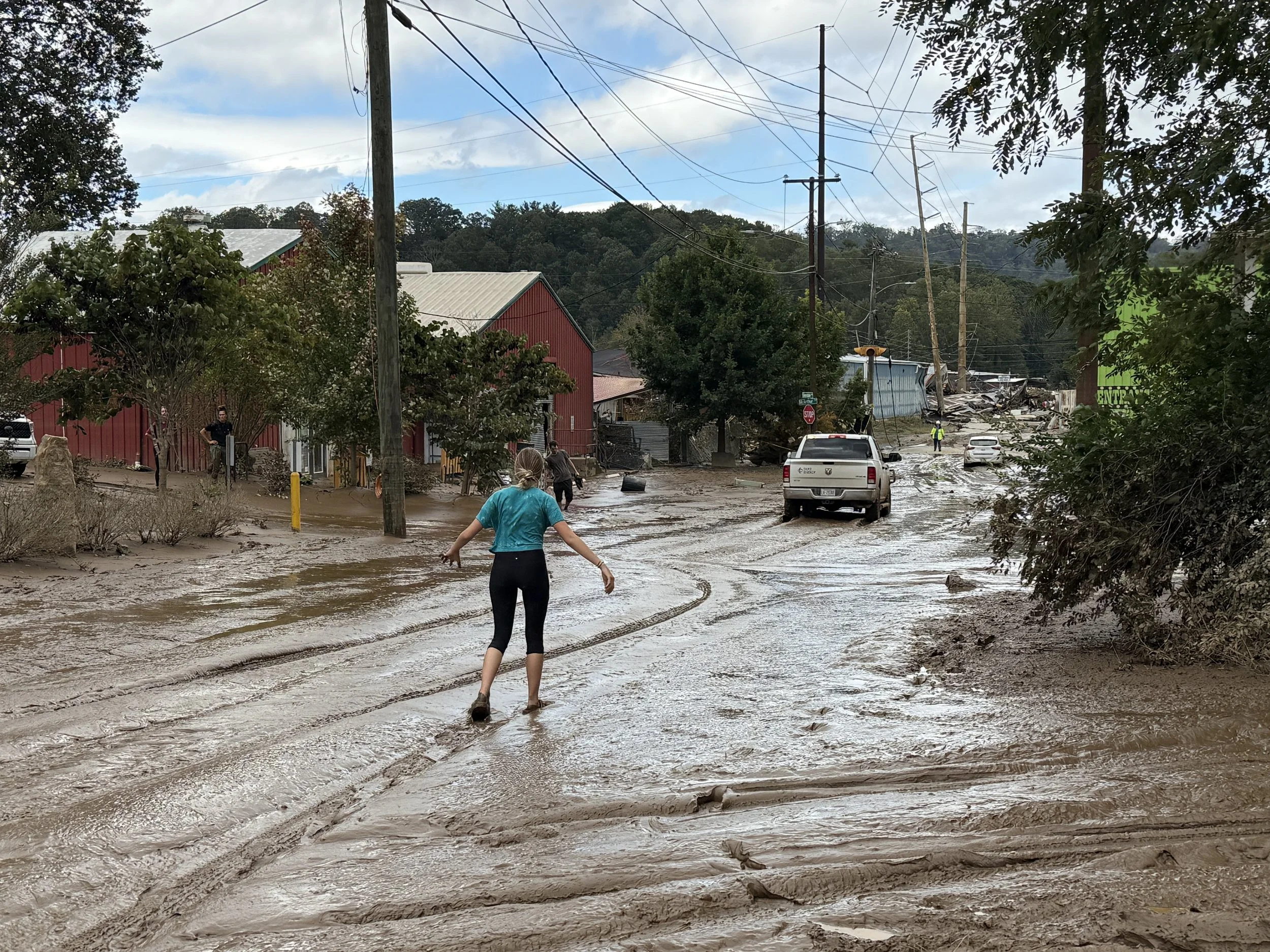
Image from Hannah Cole
You wouldn't think a town in the mountains would be devastated by a hurricane. That's what happens to cities on the coastlines. But we live in a world undeniably affected by climate change, so all bets are off.
Today on the Art Problems podcast I speak with Hannah Cole an Artist and Accountant based in Asheville, an artist-friendly city heavily impacted by Hurricane Helene.
She shares how the hurricane has affected her and her family over the last several days, which includes losing her life's work, being exposed to toxic chemicals and without water since last Friday. Many artists are in the exact same position as Hannah or worse.
Listen to the podcast to learn more about how the hurricane aftermath affects the residents of Asheville.
Here's how you can help:
Money Bootcamp:
Join Money Bootcamp
Mutual Aid:
Hannah's PayPal Mutual Aid
Follow Sunlight Tax on Instagram, who has been sharing Venmo accounts of small businesses in Asheville.
If you need help:
Rauschenber EmergencyArtGrants
CERF+ (for craft-based artists but craft is defined VERY broadly)
[PODCAST] Art Problems: Do You Need a Gallery?
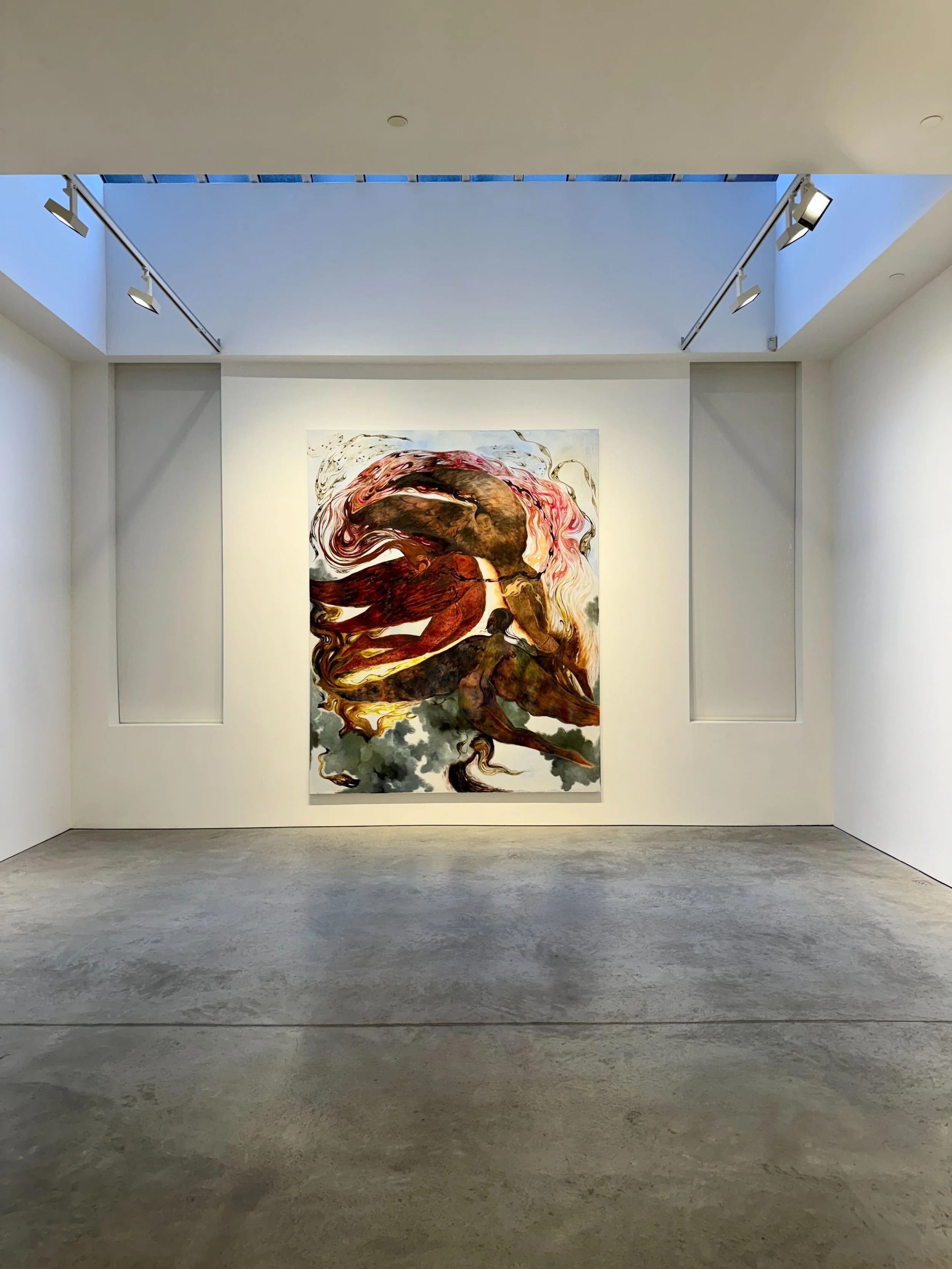
Naudline Pierre, The Mythic Age at James Cohan
There was a time when I couldn't imagine even asking this question. Of course, you need a gallery. How else will you sell your work to collectors?
But now, in the age of Instagram, Substack, and websites, maybe it's not as urgent a need. You can connect with buyers on your own.
Even galleries don't always think they need galleries. Many have closed and become advisory firms. Many have become advisory firms and then returned to the brick-and-mortar space!
In this episode of Art Problems, I talk about this new world — how to manage gallery closures and what you need to make a go of it on your own.
Relevant links: https://www.theartnewspaper.com/2024/09/24/new-york-gallery-closures-leave-artists-fending-for-themselves
[PODCAST] Art Problems: Your Residency is a Feminist Act
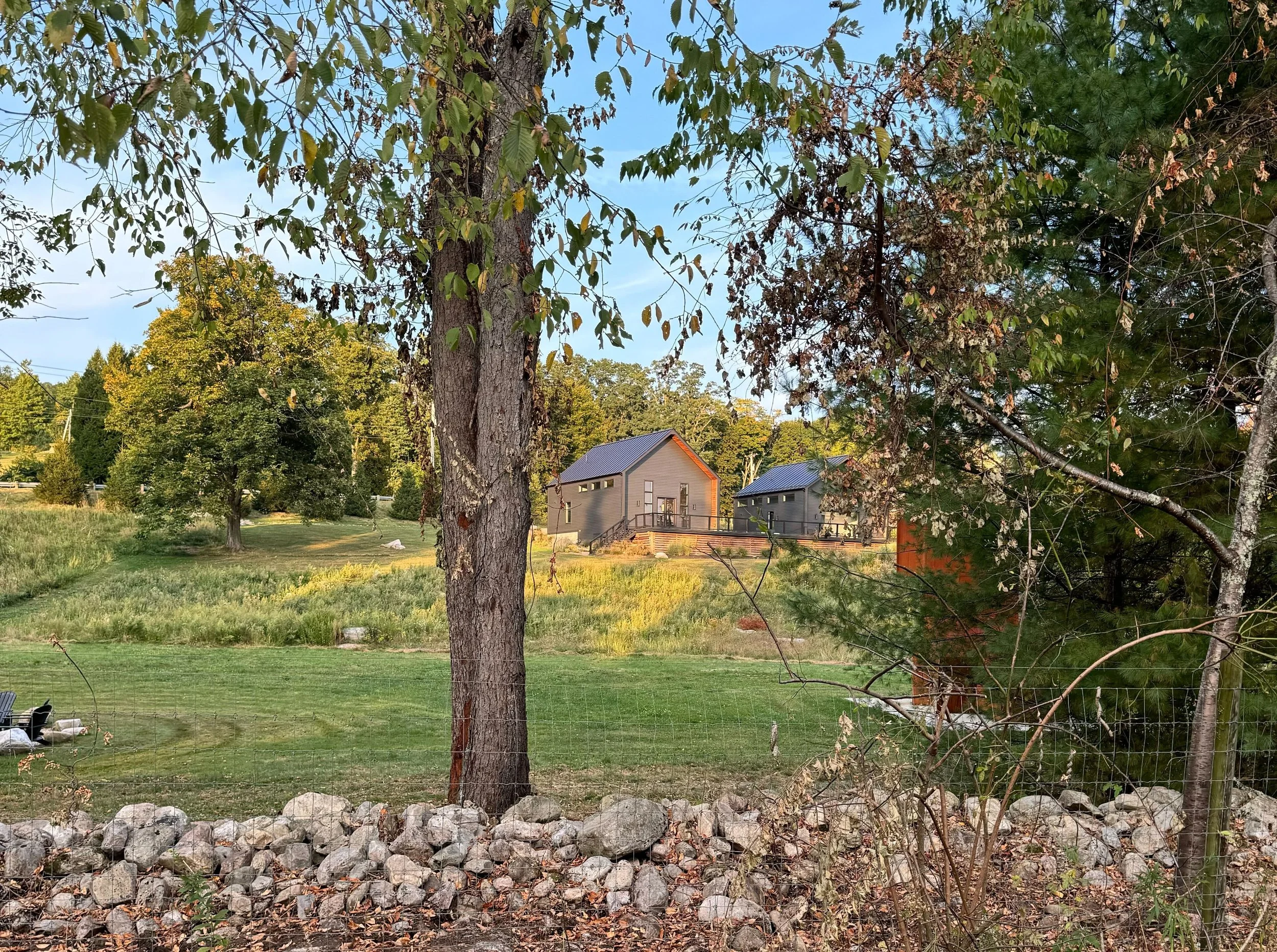
Is it possible to leave your family for a couple of months to make art on a residency and not feel guilty for doing it?
For many of us, probably not, which is why on this podcast, I speak with artist Danielle Mysliwiec about why her experience at Surf Point, The Tides Institute, and Long Meadow Art Residency is worth any guilt incurred in the process.
Put yourself and your career first whenever possible.
In this podcast, we talk about residencies, networking, feminism, and even the new Miranda July book All Fours.
Relevant links:
https://longmeadowartresidency.com/
https://www.tidesinstitute.org/studioworks-artist-in-residence-program/