[PODCAST] A New Source of Opportunities: An interview with Eric Shiner of Powerhouse Arts
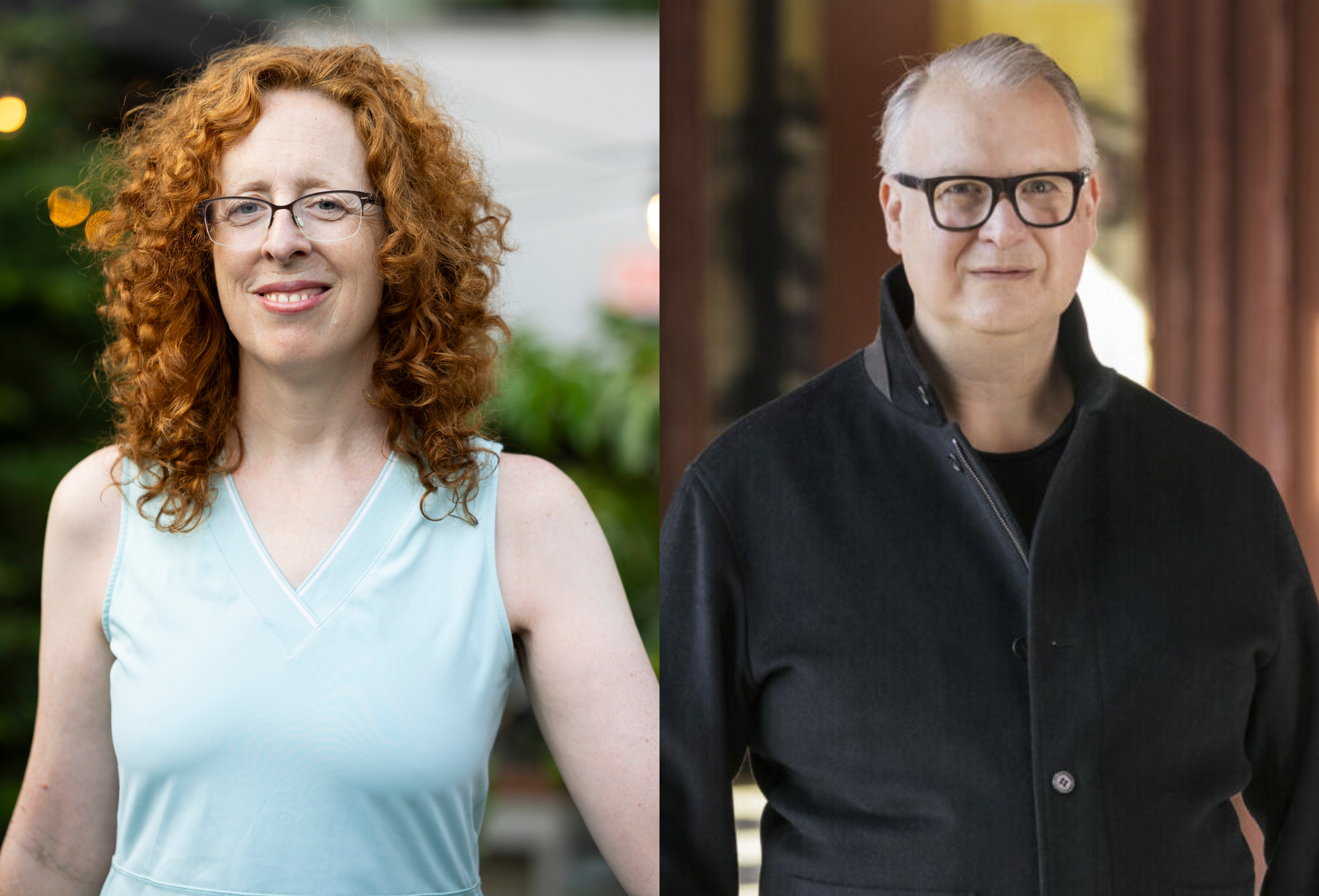
Left Paddy Johnson, Right Eric Shiner
Eric Shiner, President of Powerhouse Arts joins the podcast to give artists the skinny on this new organization. This 170,000 square-foot nonprofit in Brooklyn's Gowanus neighborhood is fast becoming one of the most significant resources for artists in New York City.
Eric walks me through Powerhouse's seven fabrication workshops (ceramics, printmaking, textiles, wood, metal, and more), their artist subsidy program that makes these resources financially accessible, and their new artist residency program.
We also talk about how Powerhouse is expanding into exhibitions and performing arts with affordable ticket prices, and why they're supporting Fall of Freedom—a nationwide protest defending creative expression.
If you've been struggling to find affordable fabrication space or access to specialized equipment, this conversation will give you tangible options and genuine hope.
Relevant Links:
Podcast Episode 95:
You are listening to the Art Problems Podcast, episode 95. I'm your host, Paddy Johnson. This is the podcast where we talk about how to get more shows, grants and residencies. And this week on the podcast, I'm talking to Eric Scheer, the Executive Director of Powerhouse Arts. A new nonprofit based in the Brooklyn neighborhood of Gowanus.
I wanted to speak with him because one of the most common struggles that artists tell me they have is lack of opportunities. And as the head of an organization housed in a 170 square foot building dedicated to fabrication and showing art, powerhouse arts is uniquely positioned to provide support to artists who need it.
But you may not have heard of Powerhouse Arts up until now, which for such a large operation is really a bit unusual. I talked to Shiner about why they kept a relatively low profile up until now, how that's changing and how they help artists. So let's dive in and find out what they've been building.
Eric, welcome to the show.
Eric Shiner: Hi, Paddy Johnson. How are you?
Paddy Johnson: So good to see you. It's been, well, actually not so long because I saw you at The Powerhouse talk with, uh, it was an our form talk. Exactly. But prior to that, it had been a while and I wanted to have you on the show to talk about Powerhouse a little bit. Now with Powerhouse. I think one of the things that I found most extraordinary about that building is that it's so massive. Can you tell us a little bit about what this building actually is and how it came to be? Because it seems like there's actually been multiple stages to the unfailing of what this organization actually is.
Yeah,
Eric Shiner: and, and
Paddy Johnson: how it helps artists.
Eric Shiner: 100%. It is indeed a massive, beautiful structure, and it is very long in the making. Our origin story starts back in 2012 when our founder Joshua Reni, who is a third generation philanthropist and also happens to be an artist. Was hanging out in the neighborhood with some artist friends. As we all know, the Gowanus for a very long time has been home to a large number of artist studios. Thanks. Largely in part to the infrastructure of the neighborhood as it was, which was all old warehouses and factories. It was a site of industry, a site of production for many, many moons from the late 19th century into the mid 20th century. But as all of those industries started to leave, New York artists as they are want to do, started to move into those spaces and make them their own. So I certainly did studio visits in Gowanus for a very long time as part of my career as a curator.
Paddy Johnson: Me too.
Eric Shiner: And me too. Yeah. I think all of us, it's, you know. It's very funny that when I say Gowanus today, a lot of people don't know where it is, whereas everybody in the art world knows where it is because it was such a prime locus of artists. But Josh was hanging out and literally walked by the building one day and saw it sitting there. It had been abandoned for nearly 40 years at that point. It originated as a power plant. It was built in the first decade of the 20th century, and it was really built to power the Brooklyn Trolley car system, and then many decades later started to power the subway system as it came online in the neighborhood. Wow. Okay, so that's. You know,
Paddy Johnson: very, very, like it's a large space, but also like really built for a very specific functionality. I remember
Eric Shiner: absolutely.
Paddy Johnson: Pictures being like red brick or something like that.
Eric Shiner: Yeah, it's red brick. Exactly. And you know, it really was built to power society to get people to and fro and served in that capacity until the 1950s. And then it became obsolete. So for a few years after that, it was turned into an incinerator. Um, so a lot of the city's cardboard was burnt there. And the old turbine hall where the machines once lived, and then by the early 1970s, the building was completely abandoned and sat there empty for so many years. And I should say that it wasn't always empty, even though it was abandoned. In that, in the like nineties into the early two thousands, we had a group of up to 50 street artists who were living and working in the building. In those years, it was called the Bat Cave, and it played host to a lot of raves and pop-up exhibitions, and it was really, I like to say almost like a dystopian utopia anarchy kind of framed supreme, and it worked until it didn't work. Sadly, drugs started to enter that community and it sort of started to fall apart. So the city then shut it down, boarded it up. And really until Josh stumbled across it and literally broke in one night to the building and just took a look around and he was so inspired by the volume of space inside that he realized that he could buy it and do something with it to support artists and their creative endeavors.
Paddy Johnson: Now, Josh is a philanthropist, but how, how did he get connected to, to the artist community? I'm just wondering because. And I'm, I'm just gonna be completely transparent about like, my assumptions here, which are obviously just assumptions, but my idea of people who have like, let's just say a lot of money, is that they're typically not breaking into buildings and Yeah, hanging out with like, you know. Artists for pop-up exhibitions and like really down in that, that kind of like in that part of the world, you know? So this makes him like slightly different in, in my estimation.
Eric Shiner: 100%. He is very much an atypical philanthropist and because he's an artist himself and makes ceramics for the most part, his wife Monica is also an artist. So he really eats, breathes, and sleeps art in so many different ways and has done really, you know, since being a young person, his family has always supported the arts over all three of those generations. So the appreciation of arts was always front and center, and he really feels that as an artist, he has the rare ability with his resources to be able to help other members of his real community. So it is very atypical and I think, you know, we're all in a very lucky position that all of those stars aligned in ways that are not what we would normally expect.
Paddy Johnson: Well, and I also just wanna pull this out because you are the executive director of Pioneer Work. So you are working with Dustin Yellen, who is also an artist and a founder of that very large organization, and this to me, reads as something is a specialty for you. You have a specialty of working with philanthropist artists, which I actually think is really important because if you look at the biggest foundations in this country, they are often started by artists, and this is where you started. Well. A little bit adjacent, but you started at the Andy Warhol Museum, uh, which is very closely connected to the Warhol Foundation, which is a massive giving organization.
Eric Shiner: 100%. And when you think about the Warhol Foundation and how Andy's legacy lives on, not only through his art. Just as equally importantly, through his philanthropy and what his foundation has been able to do to support artists and arts institutions around the country is really, you know, so wonderful to think about how he just continues to be a part of the conversation through making sure that his wealth, that his access was able to be transferred into a foundation with the sole focus of supporting art and artists.
Paddy Johnson: Right? Yeah. So, so tell me a little bit more about this building because we, we sort of went down this path and I think the first thing I really wanted to impart to people is just how insanely large this thing is,
Eric Shiner: it is so big. It's 170,000 square feet in total. It's six stories tall for the interior floors of the building. And then we have on our roof another three stories of mechanicals water towers. There is literally a ConEd power grid on our roof, and that is a city unto itself up there, but it's just absolutely huge. And it's also really beautiful because we were very fortunate to work with the Swiss architects, Hertz Sogan, Deron on the building, and they were our architects and they partnered with a New York firm called PBDW and all of the volumes inside are. You know, both industrial and sleek and beautiful. And even though it's made out of brick and concrete, it is still a very warm environment and a lot of that has to do with the graffiti that was left behind by the artists that lived in the building in the nineties. So we decided to keep all of that graffiti on the interior walls of the original building, and that really imparts a very warm, authentic feel in the building. And also our color of choice, which we call powerhouse red, which all of the metal beams and other major components of the building are painted in this color, which is the exact color of Rustoleum actually, and it is both industrial and warm at the same time. So we feel that our interiors are a place that people want to be and it thus comes to life even more when you add our team and we have about a hundred employees right now.
Paddy Johnson: That's insane. We're an arts organization that's, I know, really there to support artists like. This is why I wanted have you on the show. I'm like, this is,
Eric Shiner: yeah.
Paddy Johnson: I only like just figured out that you guys existed. So.
Eric Shiner: Yeah.
Paddy Johnson: And also full transparency. I feel like I should have known about this way before.
Eric Shiner: It's very, you know, we're doing it very carefully and systematically in letting this unfold in an organic way so the people find out about us. So that you don't get it pushed down your throat in a massive ad campaign to say, this is what we are, this is what this place is, and leave it at that. We want it to be organic. We want it to be real. We want it to be responsive. And really from the very inception of the project, through all of the study groups, all of the community opinion panels that happened, there were many groups of artists who were brought in early on to help inform what the project would be. We've really, you know, listened and wanted to be as responsive to artists and their needs as humanly possible.
Paddy Johnson: Now I I, I'm gonna cut you off just for a second because I wanna make sure that everybody knows this be because I do wanna push back on just one little element, which is I spent a lot of time Googling powerhouse arts in preparation for this interview. And what happened was that I got a lot of ads on Instagram for Powerhouse. Yeah, now you are. Yeah. Yeah, yeah. So I just want everybody to know that that may happen. I actually don't mind the ads. I think they're, they're, they're actually by ad standards quite beautiful and I really don't mind it when arts organizations are advertising to me. I don't want anybody to be surprised when that happens.
Eric Shiner: 100%. And now we are advertising full tilt to really get as many folks to come to our performing arts festival, powerhouse International, which is happening right now, and it's our first big foray into welcoming large numbers of people into the building. You know, we've been open for a, you know, a little bit over two years now. We opened in May of 2023, and that's when we decided not to do major campaigns, major pushes, because we wanted people to find it and to stumble across it, to have that sense of discovery. Also the reality that we were still figuring out what exactly we were going to be. And when I was brought on board, it was really with the challenge to turn this incredible building and the workshops and the fabrication studios and the core nugget of the idea of how the organization supports creative expression, how we would actually unfold that and start to tell people what we were doing and start to welcome people into the building. So as we developed those ideas, we realized that not only do we have these seven specialty workshops, making artwork physically with artists and materials like ceramics and printmaking and wood and metal and textiles and sculpture, and all of the many things that we do. We also had the ability with our very large event spaces, to start to think about being a presenting organization and to support artists and creative expression by actually showing work across all of the many forms that art takes.
Paddy Johnson: So I, I wanna come back to that in a second, but I, I wanted to go back to something you said a little bit earlier about the development of the project, which really stuck out to me as sort of different from standard development projects in the city, because I, I think, was it Five Points? Is that the name of the development project in Long Island City, where there was all kinds of extraordinary graffiti and protests? Around its destruction because the developers really did not the, that wasn't a concern for them. They just wanted to remake the building the property and sell it for, you know, a bunch of money. And that's eventually what they did. And we really lost a lot of, like New York lost a little bit of its history. Its artistic history. Yeah. In that process. Absolutely. And so, and that by the way, I think was sort of a standard affair at the time, and keeping the graffiti and keeping the, the bones of this building. You know, I think that this is something that feels to me very speci, like very specific to art, where I think one of the things that art often does, especially, I mean visual art, but all of it, like we call back different parts of history that's part of communicating with a larger context. And so having that as part of the objective for the renovation of this building.
Eric Shiner: Wow. And we're really proud of the amount of care that went into that. And actually the entire facade of the original turbine hall has been landmarked. So we worked with the Landmarks Commission throughout that process to make sure that it would be landmarked so that it was safe as it, you know, is now forever. That, you know, it would always be protected that way.
Paddy Johnson: Yeah, and I just wanna pull out, I, I can't remember whether it was the Times or something that it, where I saw an article where you were talking about how like during the reconstruction process that the floor you were standing on was at one point, like just a lake filled with trees. Yeah, and to me, I really appreciated that visual because it just showed how far. Basically the building had kind of how much it had fallen apart and how much restoration really needed to be done. So, absolutely. You know, I think one of the things that's really clear here and why I wanted to go back to this is that the entire project of the, like the restoration feels very driven by artist concerns, which, you know, I think in an ideal world makes this place very friendly to, to artists.
Eric Shiner: Yeah, and I agree fully. And you know, going back to the graffiti element specifically, graffiti is so integral to the aesthetics of New York City. It is such a New York thing that it just further adds to that authenticity and the fact that this was a building that was inhabited by artists. That it was their home, it was their place to create, to dream, to be radical. And I think that radicality is so tied to the ethos of graffiti as a gesture that, you know, goes against the status quo. It's literally tagging the infrastructure of a place and leaving your mark. And because we want to support artists leaving their mark, it was just so important to make sure that as many of those marks stayed a part of the fabric of the place, and I agree that it really does make it so much more welcoming and really states through architecture that art is the most important thing about this building.
Paddy Johnson: Right. So can you describe in a little bit more detail what kind of opportunities are available to artists, like visual artists in particular, but
Eric Shiner: yeah.
Paddy Johnson: I know that you have like powerhouse arts really serves a broad community of artists. Yep.
Eric Shiner: We do so in so many ways and you know, we're launching a lot of new programs. So in within the past year, we launched our artist subsidy program, which literally gives artists basically an amount of money to use in our fabrication shops so that we're working with young artists who might not otherwise be able to afford, you know, our fees that we charge for fabrication. We try to keep our general pricing structure about 20% lower than any other firm, and in most cases, art fabrication is often a for-profit endeavor, and we are a nonprofit organization writ large, so we want to make sure that we keep our prices lower. We also wanna make sure that we're working with artists at all phases of their career. So that's a great opportunity for young artists to apply to that program, receive a grant, so that they can come in and work with our incredible teams to make a project happen.
Paddy Johnson: Right. And so like what kind of fabrication studios? Who are we talking about? You talked about ceramics. What else?
Eric Shiner: Yep. So we have ceramics, printmaking, textiles. We have wood and metal and public art, which is basically large scale sculpture. And we also, next year we'll be opening our small metals workshop, which will focus on jewelry and also a small wood shop. That will be a combination of a training facility so that if an artist wants to come in and learn how to work a jigsaw or a table saw or something like that, or do some lathe work, our teams will actually train folks on how to use these materials and also in all of our fabrication studios, we have top tier, really state-of-the-art equipment that artists don't always have access to, so that allows for easier fabrication. For example, in our ceramic studio, we have a RAM press, and that is not a common term. It's a machine that allows for rapid production of ceramic objects. So in one day you could make up to 150 of the same object using a mold that this machine injects clay very quickly into the mold, and then has an air system that quickly shakes it loose. So it allows for really rapid production, and you would normally only find a machine like that at a China factory. So we try to make life easier for artists and also to meet artists where they are in all of our fabrication shops. And then over and above that we have two community studios in ceramics and printmaking that individual artists can join by the month, and it's always month to month. You don't have to join for a year, and you can come in and use our equipment and our space to make your work. So in ceramics we have about 170 members right now, and they're able to come in, use the shared workspace, the shared equipment. They have access to our teams and their expertise, and also to our kilns. And we have both gas and electric kilns. And hopefully one day soon we'll do Raku kilns as well to fire the work. And again, we try to keep everything as affordable and accessible as we humanly can.
Paddy Johnson: I'm starting to understand why you need a hundred people to run this thing. This like, it's actually, I, I think one of the things that I keep trying to do is just like wrap my head around the scale of this thing because I just haven't seen anything like it. Yeah. And so the language around it, like, first of all, you have more staff than a lot of fine art departments, right? Yes. I think we're, we're sort of looking at something like, what is it, the Savannah School of Art and Design, like scale wise, right? Yeah. It, the building itself, like I looked at terms for that, that, that might give people a sense of scale, like we're talking aircraft carriers or you know super giant Walmart stores. Like when I Googled to find that out, Google actually gave me the name of a specific Walmart in a specific city because not all of them are that large. Wow. Like this one is so, so that, but that just seems like it could be a total game changer for artists here. Because of the, just the volume of resources and the way that you're able to keep this just affordable for artists and,
Eric Shiner: yeah.
Paddy Johnson: What is the way that they access this? Is it just like, do they go to the website and sign up? Yeah. Like what is
Eric Shiner: it Literally that easy? So that's literally,
Paddy Johnson: okay.
Eric Shiner: So on our, in our website, we have an intake form basically where we ask artists to give us a rough sketch of the project that they would like to work on with us. Then our team received those and determines who the best point person amongst our, you know, probably 50 to 60 artists, fabricators that are on the team, who are all specialists in their own areas, in certain types of making. So we have people that focus on screen printing. We have people that focus on embroidery. We have, you know, everybody has their own practice, which is really great. And also it's another great way to help the arts economy and that so many of our employees or artists in their own right, but they'll then be the guide through the process for the artist's client, and they'll then determine who else on the team should be a part of the conversation and the dialogue. Because oftentimes projects, because of the multidisciplinarity of so many artists work today, we find that we'll be using multiple workshops to make this work actually happen. And once they figure out the needs of the artist and what the project entails. We'll then work on a budget and a timeline and share that we're all about being as transparent as humanly possible. And once everybody agrees, the project goes into the queue and starts to unfold. So it's really a magical process and you know, it goes back really to our very core reason of being in that, you know, with the rezoning that was imminent in Gowanus and the fact that so many of the small fabrication shops and the studio spaces in the neighborhood we're going to be raised to make room for new apartment buildings, Josh and the early team realized if artists didn't have easy access and affordable access to fabrication in the heart of New York, it would be even harder to be an artist here and many more artists would leave. So that's really the core ethos of why we exist, to make sure that artists always have a safe and affordable and accessible place to make their work or have their work made for them in the heart of Brooklyn. And the added beauty of that is with so many different types of fabrication. Josh very smartly at the beginning, likened this, building this massive thing to a huge beehive and thought about how the artist would in fact become bees buzzing around the hive and would start cross-pollinating and start thinking about different ways of making, and we're actually seeing that happen all the time. So an artist might come in, for example, to have a print made in our print shop, but then they do the tour of the building and we see this happen. All of a sudden, an artist who's usually working in two dimensions is all of a sudden wanting to make something in a ceramics in a three dimensional way. So it's happening in real time and it's really beautiful for all of us to see that happen.
Paddy Johnson: Now the space subsidy program, you know, where you, you offer affordable studio space to, to artists are like, that is available to New York based artists. If a, if an artist, like a, let's say they're on the West coast, but they, you have some specialized material or like facilities that they wanna use, could they come here and use it?
Eric Shiner: So that is, you know, a very interesting question. And you know, for the most part, we actually don't have studio space. So the three studios that we do have are part of our brand new Artist in residency program that we just launched. And our first three artists just arrived last week and we decided to start with a focus on New York City based artist and artists who self-identified as facing, you know, economic hurdles. And also identify as bipoc, queer, any subaltern identity, because we want to be there to support artists who already have a challenge or two just based on their identity, and especially now we realize that we need to really lean into this. But we will expand the program to be a national Artist in Residency program. And then very quickly after that, expand it to be an international program so that artists can come. It's a three month program, have a studio space in a traditional sense, but more importantly. Um, we wanted to sort of break the mold of what a typical artist in residency program is, where usually you get a, a blank space and you do what you always do. In our case, artists are actually embedded in our fabrication shops and they get to pick two to be their primary partners while they're in residence with us. So they'll actually be in the fabrication shops working alongside our teams. And we find that to be really exciting for everybody because not only does the artist all of a sudden have five or six collaborators that they can talk to work with, but our teams also love learning from the artists who of course have their own way of doing things. So it's definitely a two-way street, but we will definitely expand that program over time. And otherwise we invite artists to come in and if they want to be a part of the making process, they're always welcome to be working alongside our fabricators on their projects. And other artists are, you know, busy and aren't able to come in. And we're okay with that too. So we do a lot of Zoom consultations. We worked on a major print project with a very, very well known artist and literally sent proofs to him in California once a week so he could take a look. Wow. See the progress, and we try to, again, make it as easy as we can for our clients.
Paddy Johnson: Yeah, so the, the program is just, the programs that you have are just so vast. It's really, I mean, there's, there's almost so much to talk about that it's hard to, yeah, hard to keep it condensed. But I did wanna talk about the performing arts festival, which is going on now, and one of the reasons that I wanted to talk about this is that to, to me, for a very long time, one of the problems is that is particularly acute in the US is that performing arts, which really needs a, if you're a performer, you need to be doing that work every day. And it's very, it's expensive. You also have to have these rehearsal spaces and the United States has really traditionally. Just very much underfunded that area of the arts. Yeah, so there's only been very, I think, just pockets of places that have really been able to develop properly. And what you've seen with the like downtown dance scene was that I, I felt that, you know, it was really hamstrung by its lack of funding. Yeah. So here you are and you have this space, and I think this, the shed too has this very large space that can be used for these big performances and suddenly it's like inside the city, we have a lot more organizations within the course of just a few years that are really able to serve a, like a performing arts community. How did you think about developing that?
Eric Shiner: Yeah, it was just, you know, so important for us to really think about the best and highest use of our space. And we realized that for, you know, visual artist performance artists to have access to what is literally Brooklyn's largest column free space in our grand hall which is 18,000 square feet on the ground level, and it has another 4,000 square feet around the mezzanine level and 30 foot ceilings that that massive area could accommodate so many types of things. And we also realized that we could build a theater, which we've literally done. So we've built a temporary 800 seat theater with risers and very comfortable chairs. I will tell you so that we could. Artists have the space and the time and the budgets to really present what we hope is the type of work that we weren't seeing a lot of in New York. And very specifically, we've honed in on work that is both radical and global. That's where we saw an opening. And what
Paddy Johnson: does that mean? Like radical? Because like both those terms seem kind of subjective to me.
Eric Shiner: Yeah, they are. They're absolutely subjective. But we wanted to do the types of things that other organizations might not do. Things that are uncomfortable, things that are from regions of the world that don't always necessarily have a platform here in the city. And those things were very important to us because we also, I've always realized that one of the best things you can do to support artists in your own backyard is to bring things from overseas that they wouldn't normally be able to see.
Paddy Johnson: Right.
Eric Shiner: And that they thus have this opportunity to see what's happening in Madagascar, in Japan, in Brazil. Paris, but to have it right here and make it that accessible and also with the festival, we were very committed to making sure that we kept ticket prices very affordable because that's another problem that we saw happening in New York, that so many organizations just because of the realities of how much it costs to operate a place, and I get it. You have to charge, you know, 200, $300 sometimes or more in the case of Broadway. But we wanted to make sure that over half of our tickets, so over 10,000 tickets for the festival are priced at $30. And that was really important to us. And luckily it was also important to the funder that very generously underwrote the great bulk of the expenses of the festival.
Paddy Johnson: I mean, this feels like some sort of dream.
Eric Shiner: I really, I feel actually like I'm living a dream and we want as many people to be a part of the dream as we can because we, you know, as we're doing this, as my team and I are building this out, and we have a lot more exciting things to come, we start exhibitions in January. So we'll be announcing our first exhibition in a couple of weeks in mid-November. And also I am sure you saw that we just hired the absolutely incredible Rujeko Hockley to be the head of our exhibitions program. And she of course, most recently I did see that too, was Chief curator of Creative time.
Paddy Johnson: Yeah.
Eric Shiner: And she is one of the great, great minds and great doers and the world of curatorial right now. And I'm really excited to see what she'll bring her program. We'll start in 2028 so that she has the runway and the time and the resources to be able to build her vision for our program. But we're really excited to be able to welcome a lot of people into the building to, again, have experiences that they might not otherwise be able to have here in New York.
Paddy Johnson: Yeah, I mean, I think like one of the things that I think about a lot as somebody who runs a podcast called Art Problems, Art Problems, and Serves. And I work to serve artists just, just as you do is I, I think about what the, the main problems are that artists have and it seems like, yeah, the, one of the main problems that an artist will have is that there aren't enough opportunities, and this is an organization that with the scale that you have and the ambitions that you have, and I think this is really important that we, it's something we don't talk about enough, is that we need operations, that organizations that operate at scale for artists, because artists are a very large group and they're really underserved, and so having a resource like this just feels like it could be a total game changer.
Eric Shiner: We really hope so. And you know, we realize we're building a new kind of cultural organization kind of writ large, and it's sort of like the Kunsthalle crashed into an art factory. And then just thinking about that, it really got me and my history going and I realized this is sort of a modern day iteration of Warhol's factory.
Paddy Johnson: Yeah, yeah.
Eric Shiner: And Andy, of course, created this underground environment that not only was the site of his physical art production, but it also was becoming a site of cultural production writ large by the people that went there, the events that happened there, the parties that happened there, the interactions that happened there. And I realized like, we can do that too now by bringing people together. We can create a new future for artists and really be part of that catalyzing effort to see what comes next. And it's a really exciting place to be and an exciting thing to think about.
Paddy Johnson: Yeah. And you know what, one of the reasons I wanted to have you on this podcast is I feel like right now it can be very difficult to have hope about a lot of things. You know, I think the political environment is not good. It's not good for all sorts of things, but it's, it's not good for arts and it can, and it feels for a lot of people, like the world of opportunities are shrinking around them. Yeah. And so having something that expands that is really, really important. And the other thing, you know, we've danced around this a little bit. Like, you know, we've, you've talked about the word radicality and I think, you know, I. I've asked, you know, exactly what does this mean. But I do think one of the, one of the many reasons I had you on the show is when I came to the Powerhouse Talk with Robert Longo, one of the first things you all talked about was Fall of Freedom. Dred Scott's protest against everything that's happening politically right now, and that was the first time that I'd seen an organization and really get behind something quite political. And it was also the first time that, you know, I had been able to talk about something in public. I mean, that's not true. I've been talking about it on the podcast. But like you, that I'd seen like this very visible pushback and that just seemed like, I just felt like I wasn't alone.
Eric Shiner: Yeah.
Paddy Johnson: And I wondered if you could just talk about that a little bit, because this was a conversation that we all had in this public space, and I think that I know that my listeners need to feel like they are not alone.
Eric Shiner: 100%. And I think so many of us feel alone right now and we have to realize we're not. And you know, it's not even a political thing because of course by law, a nonprofit cannot take political sides or political stances, however, is an organization who's very ethos is about supporting creative expression. Like that's our first priority is to make sure that artists have the space, the time, the freedom to say what they want to say in any way that they want to say it. And that's why we decided that we would participate right away when we heard about Follow Freedom and that we would make sure that we as an organization signed on in support of creative expression and in support of freedom of speech. Because as soon as artists aren't able to be free in what they choose to talk about, what they choose to make their work about, then obviously it's a very slippery slope into something else. And we wanted to also show that we were committed to the degree that we would sign on, and our contribution is going to be part of the performance festival with an amazing performer from Los Angeles, Claire Rousay. So that will happen on Saturday, November 22nd. It's a concert. She is a trans artist and she immediately said, yes, I will participate. And the great news is that there are now organizations all over this country who have signed on to Fall of Freedom, and folks can go to the website, it's falloffreedom.com, and literally type in your zip code anywhere in the country and find a performance, a reading, an action that is happening somewhere in proximity. And I think that almost all of the country is now signed up. So there hopefully will be something close. And I also would say to artists and to organizations that are listening, if you don't see your community there, then do something. Think about a reading, think about going to your local arts institution and asking if they would participate and if they don't want to participate, as there are a lot of realities that people are facing right now, whether it's board pressure, financial pressure, economic pressure, et cetera, et cetera, then think about using the front steps of a library of a museum. It's very easy to do a reading from someone that's important to you. That can happen in public and invite folks to come to that so that we start to show that this country believes in creative expression and believes in artists' ability to transport us to other places and to other ideas. And if that goes away then, you know, this isn't America anymore.
Paddy Johnson: Yeah. So I don't wanna leave the podcast on that particular note, but bringing, bringing this full circle, like I think this particular project is very easy to participate in, and one of the things that we are doing when we participate in this is that we are manufacturing our own hope. Yes, this is what this looks like. This is something that I took from a, a previous podcast guest, Julie Pepto, an artist who's really fantastic and been very involved in the activism community since the reelection of Donald Trump. And this is our opportunity right now to. To manufacture our own hope. So I hope that everyone here takes advantage of that and also takes advantage of powerhouse arts because this is a new juggernaut on the scene. I'm so excited that I was able to have you on the podcast. Eric, thank you. You, you were fantastic and you really gave me a sense of scale of this organization, which had been so hard for me to wrap my head around. And I think I'm still in that process, but a little bit further down the road.
Eric Shiner: Don't worry. It's so complex and we're doing so many things that we know that it, even when you come and do a tour of the building, it's so much to process that. I always tell people, go home and sleep on it, and then come back and let us know how we can help. But we hope that all of your listeners and viewers and all of the artists who are part of our community look to us as a resource. Can somehow help you and your practice, and it's a really exciting time to be there and I hope that everybody can come and visit us soon.
Paddy Johnson: Well, thanks so much Eric. Everybody check out the uh, site and the show notes and go visit Powerhouse Arts. We
Eric Shiner: can't wait to see everyone. Thank you so much, Paddy for having me.
Paddy Johnson: Thank you. Thank you for listening. If you like the show, please leave a review and share it with a friend. It really helps get that valuable information out to more artists just like you. You can find all of the names and the links that we reference in this conversation at berksshop.art slash podcast.
Paddy