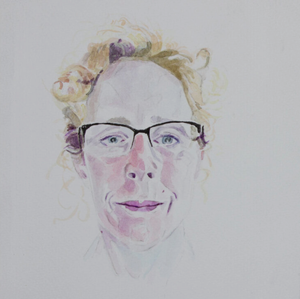
[PODCAST] Inside Netvvrk with Multidisciplinary Artist Brent Showalter
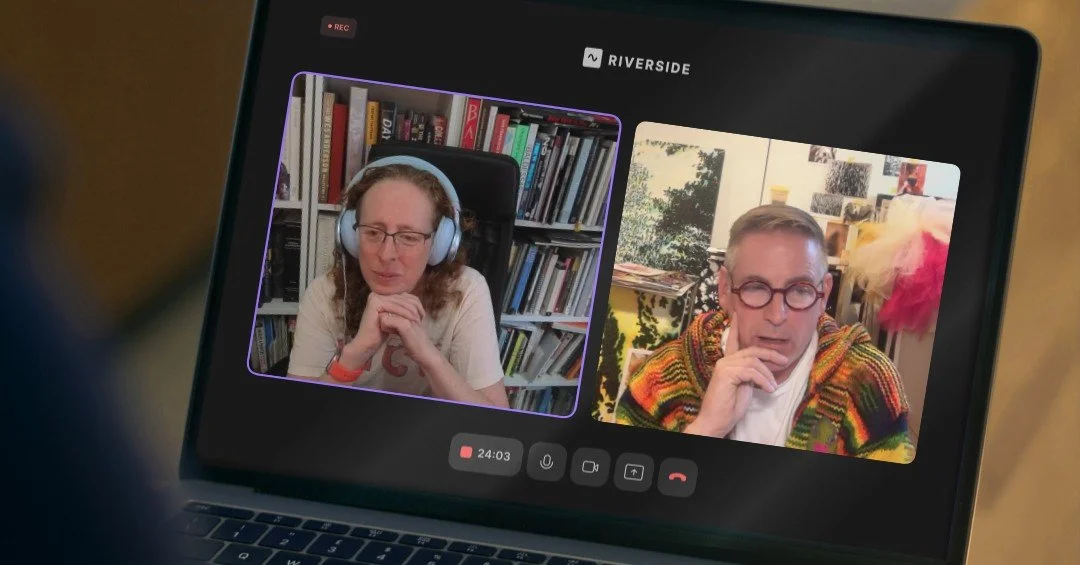
Left Paddy Johnson, Right Brent Showalter
This week on the Art Problems podcast interview series "Inside Netvvrk", I'm talking with Brent Showalter, a multidisciplinary artist whose brilliantly colored paintings and photographs transform layered compositions of color and shape into vibrating surfaces.
Brent runs multiple businesses and brings that same strategic mindset to his art practice. In doing so, he's able to devote more time to his art. We talk about how his accountability group helped him finally organize his entire archive, and what it takes to feel confident when opportunity knocks—whether that's the director of the Guggenheim walking into your studio or an Instagram comment from a curator.
Brent also shares how that casual comment turned into a curated opportunity in 24 hours—because he had everything ready to go.
If you've been wondering whether Netvvrk is worth the investment, this conversation will help. It shows what happens when you stop reinventing the wheel and start using the tools that already work.
Podcast Episode 99:
You were listening to the Art Problems Podcast, episode 99. I'm your host, Paddy Johnson. This is the podcast where we talk about how to get more shows, grants and residencies, and for those just tuning in. I'm running a week long series called Inside Network, where I interview artists about their membership experience.
The goal is to give everyone an idea of what can happen when you have help. I've spoken with data artist Laurie Frick and Abstract Painter Ann Marie Auricchio, and if you go back three episodes, you can either even hear artist and accountant Hannah Cole interview me about my experience building network, continuing this series.
Today I speak with Brent Showalter, a multidisciplinary artist whose brilliantly colored paintings and photographs transformed layered compositions of color and shape into vibrating surfaces. Brent runs multiple businesses and brings that same strategic mindset to his art practice, and in doing so, he's able to devote more time to his art.
We talk about how his accountability group helped him finally organize his entire archive and what it takes to feel confident when opportunity knocks, whether it's the director of the Guggenheim walking into your studio or an Instagram comment from a curator. Brent also shows how that casual comment turned into a curated opportunity in 24 hours because he had everything ready to go. So if you've been wondering whether network is worth the investment, this conversation shows what happens when you stop reinventing the wheel and start using the tools that you have that already work. And if you're interested in learning more, I'll be announcing the details of a free webinar designed to help you get more opportunities in the door this Thursday.
After the webinar, I'll open our annual Black Friday sale. Look for a special edition of the podcast where I share more. All right, let's dive in with Brent. Brent, welcome to the Art Problems Podcast.
Brent Showalter: Thank you. I'm happy to be here.
Paddy Johnson: Well, I'm so happy you agree to come on and chat with us about your experience on network. I know that I've had a really good time chatting with you online, and I think the first thing I just wanted to get a sense of is how you found network and me and this community in the first place.
Brent Showalter: I think it was simple. I think it was thumb scrolling and came across it. I think you said it, that was like, Hey, there's a lot of artwork artists out there that are doing things. They may not necessarily be better than you or worse than you, but they're just doing the thing that makes the difference. And that might have been the thing that said, oh. Boop, I'll do that.
Paddy Johnson: When you say, Oop, I'll do that. Did you mean and now I've joined the membership, or were you more like, I will follow this person and just see what they're up to?
Brent Showalter: Maybe both. I don't tend to linger on decision making.
Paddy Johnson: Yeah.
Brent Showalter: I was, I'm doing this, so I started doing it and. You may know when someone signs up or begins, it's like, okay, it's go day. Okay, what am I gonna do? And I mentioned this to you before I run businesses, I have to think, act, and move on. And so when I made a decision to include this in my life. Which I think is the way to, right way to look at it. I was like, how am I gonna carve this into my days? And then what am I, what am I, what am I hoping to get out of it? Right. So that was
Paddy Johnson: right. Right. And I mean, I think this gets to the question of what your life looked like before you joined. Right? So you said you, you run businesses as the second job or the primary source of income. What was your art career prior to joining?
Brent Showalter: I never had a need to live off of my art. I went to art school. I worked in the design industry for a while. I, I ran my own business where I designed homes for people who had major art collections. Then I was in the design field where I was designing furniture and manufacturing and designing homes. And all the while I was able to keep my art practice going. At one time it was an extra bedroom. At one time it was the basement, and I think that's pretty normal for a lot of people. Like you have your space.
Paddy Johnson: Oh yes, absolutely.
Brent Showalter: Right? Where are you? Where are you gonna do this thing? Then the obvious like next thing is like, what do I do with it once I have it right? So I had fulfillment artistically with my design work. My wife and I run several businesses that we own gave me the flexibility to say, how am I gonna make that work? And still, you know, shift my days. And so now I, I spend my day, I get up, I read for an hour, then I go to the studio for four hours, five hours in the morning, and then I shift gears to work world. I have a standing meeting with my staff every day at about one o'clock. Then I leave and I, if I can come back to the studio, I do. Otherwise I go to whatever fire needs to be put out at that given time. And I think being an artist is like. Your mind's always firing on something creative. Like even, you know, it can be a business problem, can be, can be very creative, but I had the luxury of not needing to, I didn't need to seek validation in the art world from somebody or anybody, but I wanted to reengage in the conversation. You make a piece of work and maybe go back to the last question, what drove me to there was okay. I'm there. Why would I be thinking about it differently than I do Building a business? Last summer I started a business with a couple of partners. I sat down, okay, what do we need? Who's our client? What? What are the problems? And then I always walk it through like, okay, like I got, I got a show coming up, right? So I'm like, okay, let's walk it through. Where are we going? How does it pack? What? What documentation does it need? Who's the end result? All the way down to like, okay, the show's over, we're taking it down. Is it packing in the same boxes? Is it gonna be like, all those things have to be ready.
Paddy Johnson: Yep.
Brent Showalter: Otherwise you fumble and you look like a moron in front of people that you want to be. Looking at you like, this guy knows what he's doing, right? You gotta know what you're doing and it doesn't. You gotta do it. So documentation is a big one. Every artist on network is gonna tell you, I fucking hate writing stuff, like writing bios or stuff like that.
Paddy Johnson: Yes.
Brent Showalter: But you do it, so,
Paddy Johnson: yes. You know, one thing that I'm sort of wondering about is the exact nature of the problem you were trying to solve and why you joined network to solve that problem.
Brent Showalter: Okay. I don't know, I I, the exact nature of the problem that I had, I have a lovely studio with lots of work and I have bodies of work that I feel are complete, cohesive, and communicate my idea well.
Paddy Johnson: Yeah.
Brent Showalter: That needs to find a place so I can have the next conversation, which is like, let the world see it. Sure. Like gallery sales and gallery representation. That's all great, but that's not an end all. Like, it's frankly not terribly interesting. In the long run, it's, it's something that you do, but if, but I know from my business side, you can't have one gallery and live off of that. You need to have seven galleries and live off of that.
Paddy Johnson: Yes.
Brent Showalter: Right. To be able to break all those pieces down. Like how does this work? I forgot where I was going with that, but, but like the,
Paddy Johnson: well, I think we were talking about the problem that you were having and you know, the solution that you had found. And it sounded like what, what you were saying was that one problem is that you wanted the work to get out into the world. And that galleries were one solution, but they weren't the only solution. And so that was something you were working on? Am I?
Brent Showalter: Yeah. Yeah. So, so I have to be able and be ready with all the tools that are necessary to, to inject myself or engage in any opportunity that comes up, that's that's the right one. And one of the things is like you go to gallery openings, you go to events in the art world, and you have to be there. You have to like do that stuff. And what happens when you run into somebody and it's like, Hey, we're an interesting fit. Here's my card. What's it gonna take you to? Is it gonna be a website that's bullshit, or is it gonna be a website that's really well thought out? Is it gonna be to my Instagram page? Which communicates me more daily? More. More. And so each, each piece has to be ready to go. And that was a problem that I was looking to solve, which is like if I sit in my studio and write something. Like an artist statement or something about a particular piece. I can easily take it and put it away in a file folder and like it's done. Right?
Paddy Johnson: Yeah.
Brent Showalter: But if nobody saw it and said, Hey, you know what, we may wanna look at that again, because it's kind of like shitty, you know? So the ability to sort of like interface with people has been very helpful. And frankly, I, I think I've said this to you before, I think the community aspect of it has for me, outstripped the curriculum aspect of it because I get to see other people fumbling through the same thing that I'm fumbling through and I'm fine like fumbling through it if I get to the right place at the end. But, so when you do things where they're like asset reviews and things like that, give you a good sounding board, a way to look at it critically. You don't have that much after college. In college, you do critiques, right? Unless you put stuff up on the board and, and you just kind of defend it. You hear new ideas and you're like, but usually you go back to the studio, you're like, yeah, that was good stuff. I'm gonna make, I'm gonna make work off of that conversation. And so the conversations become so valuable to like work with that other piece of it. Doing the thing.
Paddy Johnson: Yeah, it's funny. I'm not sure if when we get out of school we think we don't need community anymore, because I do think, like, I don't think that exactly goes through our head, but I do think that at a certain point, like our expectations for criticality change a little bit, and as professional artists there, there can be some resistance to that critical community. So I do think it's really important to seek that out because that is one thing that can really hold a career back, is not getting the level of critical feedback that you need to move all of the different parts of your practice forward. And it sounds like you're saying that you, you've been able to get a lot of that inside of network.
Brent Showalter: For sure. I mean, I regularly attend the Friday casual crits, which I think are exactly that.
Paddy Johnson: Yeah.
Brent Showalter: And I think it's called Crit Club, the collective, where that's a broader discussion of it.
Paddy Johnson: Yep.
Brent Showalter: And the thing that I hear, like I just took a leadership position in the Neurodivergent Collective, the thing that I hear in every sort of conversation room that I'm in is people wanting more opportunities to speak about their art. The prac, let's practice speaking about their art. There was a woman in, in the curriculum the other day. She's like, I'm p practicing my elevator pitch. We're like, just do it. Go here. We're all here listening. Just go ahead and do it. And so she did. People made comments and tweaked it, and she probably left there better at it. But you can't practice it the day you get on the elevator.
Paddy Johnson: Yeah. Right. Yeah. And I think that's really nerve wracking, right? To not have enough, uh sort of opportunities or that the opportunities you get. I think it's really nerve wracking to have the vast majority of the opportunities you get to practice elevator pitches and things like that in public. It's really nice to have a private space where you can practice and get it to a point where you don't have to fall on your face five times in front of everyone before. Yeah. You know, you get it down.
Brent Showalter: Yeah. For sure.
Paddy Johnson: There's, you know, we're not all willing to do that and I don't think we necessarily need to be.
Brent Showalter: I, I benefited greatly when I was 10 to 20, I was in an activity that we performed in front of huge crowds. I mean, like NFL size crowds. We were really good, like world champions and all that and, but we practiced every day, all day for the entire summer for those seven minutes of performance. And I don't think it's different the time you're spending in your studio. You're not talking about the artwork you don't, do you want to go to your show and be like the guy standing in the corner and. These my paintings, like you have to talk.
Paddy Johnson: Yeah.
Brent Showalter: And conversation skills require attention just like anything else, but you feel a lot better I think if you've done the writing pieces of it. And for sure I was always resistant to doing that. And then I realized, wow, it's actually like a practice that puts the words in my head that now I have to speak them, obviously, but I've written them once or twice or three times. That's truly the practice piece of it.
Paddy Johnson: Yeah. And you know, I do think that sometimes we think that people who have gifts for public speaking just got there naturally. Yeah, but they practice too. Like they, it takes a while to get there and I think it's something that we can all get better at. I know it's something that I constantly try to improve for myself and it is a practice. When you were trying to solve sort of the, the various problems that you identified in the practice, which you know, have to do with gaining community, the ability to get sort of critical feedback, the curriculum like that, it sort of helps you with the, the various parts of your practice that where you represent yourself publicly. Had you tried any other solutions? Like where were you in the journey of, I wanna get this thing solved?
Brent Showalter: Not like, nothing like formal. I was like, where, where do I begin? You know, you could begin anywhere, I guess, right? But in my business practices, I was like, where is the wisdom that already exists that I don't need to reinvent the wheel? I'm not interested in becoming a specialist who trains other people like what you do. That's not what I'm interested in. I'm interested in taking everything that you know and stuffing it in here.
Paddy Johnson: We assume that you need more than one person and more than one connection to really build a career.
Brent Showalter: I agree. So I belong to an accountability group.
Paddy Johnson: Yep.
Brent Showalter: Which is, I'm sure there's other accountability groups on the group, but ours kills it. Like it's great. The,
Paddy Johnson: that's amazing.
Brent Showalter: The conversation that we do, you know, it's like really quick, fast. We don't spend that time. Everyone gets like six to eight minutes per week. Over time you start to realize who the, who that person is, both as an artist. A person like, so I can apply that in my world. Two weeks ago I was at a, a show for Theatro Gates and I ran into a woman who I had been in her gallery three months before and we interconnected and I was like, Hey, I liked your gallery. It's not a thing for me, but I know somebody. It was someone on in the accountability group, like, this is a person for you. I can make that connection to them. Like, I have no interest other than it's legitimate and it's real. And that's where I find the more generous you can be. Everything takes care of itself, you know?
Paddy Johnson: Yeah. Yeah.
Brent Showalter: That that's how it works. Like I don't need to go to an opening hoping to find a connection with somebody. I go there because totally into art and I dig it. And meeting people is, meeting people is super fun. I like to fall in love over and over again every day. So then someday that might turn into something.
Paddy Johnson: So two things. One, one of the reasons I wanted to have you on this podcast is that on a personal level, I found it very helpful to have you reach out to me and say, I really appreciate the community aspects of this. I think you should push this a little bit more in the membership and I actually did, you know, like that was something that, based on that feedback, I believed you. I, I could see it happening and I thought you were right. You know, and I was really glad that there was somebody there. And the members do this all the time. They reach out when there's something that they think will demonstratively improve the community. And that's what makes it so strong.
Brent Showalter: I, I went in September. In Chicago, filter photo is a huge event.
Paddy Johnson: Yeah.
Brent Showalter: In the photo community. So they have portfolio reviews and it's the same thing. You sit at a table, you bring a body of work, and you say like, this is what I think of it. Tell me, you know, and in preparation for that, I did what I would normally do for a meeting. I pre-gamed it. I, I was like who's the person I'm meeting with? I did research on them. I did research on how I wanted to present it. However, that was all cool and, and I got what I wanted outta that piece, which was critical dialogue. But there was times when you're standing around in the waiting areas, there was nighttime events, there was some lectures, there was some like a, an amazing speaker, Diana Marsian, and in those rooms. I like reconnected with a professor of mine from a long ass time ago and now we're having dialogue. I ran into one of the guys who worked for Filter Photo weirdly. I have a son who's running for office and he's like, I am involved in this particular area that is in his district. And we had a conversation about that and I thought that was a really weird sidetrack. But then two weeks later, I was at a gallery opening and he's like, Hey, this is our neighborhood. We live in the same neighborhood and, and now I'm talking to that gallery about a show. None of that was expected as their outcome of going to the filter photo. But you still have to decide to go to these things and going to filter photo was like, okay, this is really bearing yourself. Like, here's my work. These are like professors, curators, museum directors, and you're gonna like, here's my work. You know? Right. Be ready to talk about it, defend it, all that, which is a little bit nerve wracking and scary shit, but there's the other side of it.
Paddy Johnson: Right. Well, and I think actually one of the things that we're talking about is being prepared.
Brent Showalter: Yeah, I'm, I'm totally there. There's my long answer to why would I have joined network, because I don't like to be unprepared. Right. I love to like live in the moment. I love to do crazy, fun shit. I wanna be prepared how to get myself out of there when I fall off the cliff and break my leg, you know?
Paddy Johnson: Yeah. And you didn't hesitate at all around making the decision to join, right? Like you just sort of went for it, I think. Yeah. Do you have like sort of tangible results that have come out of your Yeah.
Brent Showalter: Well yeah, I am. You can't see it. I'm packing up a show for Paris. Next week, end of the week, I will be i'll. Next Tuesday I'll be getting on a plane flying to Paris. I have a show at a, it's this hotel that the Marriott Group just bought. It's a super cool hotel, and they wanted to have their lobby space as an art space and I completely orchestrated that from a variety of things, but not the least of which was my conversations here.
Paddy Johnson: That's that's amazing.
Brent Showalter: Yeah. I mean, like, it's a, it's gonna be a fucking great show, like it's in the middle of Paris photo. It's a body of work that I've worked on with a curator off and on for about a year and it's now ready for prime time and I have a great place to take it. And I have every little piece of the puzzle ready to go. Actually, from my accountability group, I once was like, Hey, I'm thinking about doing this thing, artwork, archive. 'cause I have my artwork archived in spreadsheets and other things and, and John Lawson was like, Hey, it's great. You should use it. And then same call two of the people on on the group were like, definitely artwork, archive, definitely. And I'm like, that was in May. I was like, okay, I guess I'm gonna do this thing. So I spent the summer doing that work and then answering to my accountability group, like, Hey, I said last week I was gonna do 10 pieces. I actually did seven, but I did seven. Before that I would've done zero. Right? So the difference between doing one thing or two things, or 10 things is very different from doing zero things. And so now I have an artwork archive, fully animated and populated. And another tangible result. Two weeks ago I was on Instagram, this curator, art consultant out of Denver wrote a really cool post and I was like, that was really cool. And I sent her a message, Hey, that was really cool. I don't think we have any natural connections, but I just wanna let you know that you stuff you're making was cool. She's like, Hey, I just looked at your Instagram. Can you send me available works? And you know, like this. So I went to artwork archive, made a viewing room, sent it to her, and she was like, wow, this is great. So professional.
Paddy Johnson: That's amazing. And just so everybody knows, our artwork archive is basically an inventory database so that you can exactly what you have and it's easy to make private viewing rooms from it. And this is one of the things that I think often gets artists tripped up a little bit is an opportunity, comes around, but then it takes like two weeks to get somebody to get something together for somebody who's asked for it because you don't have the inventory already cataloged and put together. So then the opportunity just kind of goes away because, you know, I think, I actually talked to a gallerist a little while ago who was like, you got 24 hours to respond after that. Well, you know's,
Brent Showalter: my artistic practice is very ephemeral and it's all about feeling that's not what the business world's about. Right? Yeah. So the business side of the, of the thing is like, so this consultant sent me a message. I was like, yeah, I'm gonna have this to you in 24 hours and it's gonna look professional and it's gonna look like what you need to show to your client. 'cause I don't want you to have to do any work to reinterpret my thing. Yeah. Maybe the end buyer sees it, they're gonna like this is a real, this is not like some guy working out of their basement or backyard.
Paddy Johnson: Well, right. It really makes a difference. Like I think that's the thing that's a really key here, the way that you present your artistic materials matters.
Brent Showalter: Yeah.
Paddy Johnson: And it tells people how serious you are as an artist. So when you take it seriously, you see, you definitely see results. Do you have like intangible results of things that you got from joining network?
Brent Showalter: Yeah. It's, it's con it's confidence.
Paddy Johnson: Yeah.
Brent Showalter: You know, right. Like the world revolves around confidence and, and when you don't have it, you can't play.
Paddy Johnson: Yeah.
Brent Showalter: That would be the thing that I encounter the most with other people on network is, and I try to be as supportive as I can. 'cause I, the many, many artists that I've interacted with on network are all hardcore, hardcore, baller, great artists. You could do a show at the Armory. Network only artists.
Paddy Johnson: Mm-hmm.
Brent Showalter: And it would crush. Right.
Paddy Johnson: I love that idea. I hadn't,
Brent Showalter: yeah, no, I'm like
Paddy Johnson: never thought
Brent Showalter: I'm, I want, I want in on that. Right. So yeah. But that's not a bullshit idea. This is one of those business things, like you can talk yourself out of anything in five seconds. I would go to that show and then I would be like, how do I get in this?
Paddy Johnson: Yeah. Right. Yeah.
Brent Showalter: Yeah. Um, but I also, I think I sent this to you in comments was I think that the way the curators come into this, or gallerists come into this, they should, they should be more like deeply engaged in network because they're normal people too. They're trying to figure it out too. So the intangible for me was like, like I can be confident around people that I know, like, Hey, yeah, this is a great piece, but can you be confident when the director of the Guggenheim walks into your studio and be like, Hey, lemme show you some stuff. Right. That's, that's it. That's it. That's it.
Paddy Johnson: Well, right, and I think, you know, this does lead into a question about like what parts of network have been the most beneficial, but I was just thinking about like Dan Cameron, who founded the Prospect Triennial was a biennial, but now it's in triennial form. Was the direct, the head curator at the new museum works independently now, so he's gonna be reviewing works. What are the things that, and I think you brought up the slide slam as off call as something that was useful, but I, I'm wondering like what the, the best parts are for you.
Brent Showalter: The recent artist speed dating was great.
Paddy Johnson: Mm-hmm. And what was that? Can you tell people?
Brent Showalter: Yeah. So speed dating, it was, it was no different than speed dating. Everybody's on this Zoom call was like every 10 to 15 minutes it would break into breakout groups of five people. You have no idea who they are and, and it's. You know, things we just discussed, like talking about your artwork, talking about who you are, what your practice is, and then like, okay, go to the next person. But the offshoot of that call was connecting to many people, and I often do that in network scenarios where I'll offer a comment or we'll be in the chat off to the side of an event going on. And then follow up with that same person. Say like, Hey, like Veronica Jackson and I were on on call just recently. And
Paddy Johnson: No, she's great.
Brent Showalter: Fucking great work. Right?
Paddy Johnson: Yeah.
Brent Showalter: You're like, how is, how am I not seeing this in a big museum?
Paddy Johnson: I know,
Brent Showalter: and I sent her some things. I'm like, this is a great fit for you and these are people that I know this is a great fit for you. You should, you're gonna have to pursue that on your own. But things that they don't think about that I may have encountered and vice versa. Have happened to me a number of times. I was applying to a show and Marjorie Amer, who's in my accountability group, she's like, oh, I've shown there two or three times. I'm going there next week. I'll mention your name. That's fucking great, right? Like, that's the shit that you just can't, so, so that stuff happens all the time with me on network, and I structure my day like this when I, I come in. I open network, I like look at a couple of things where, where am I gonna participate? I would say that like I go to the events or I attend the things on network, but I'm in, I'm in a big city, right? So I have opportunities that are available to me and others that aren't available to a member who's in Ankeny, Iowa. Right?
Paddy Johnson: Yep.
Brent Showalter: So I think that I, I always approach it with like, how generous can I be? With things that, that are, you know, that these people who I might, might encounter, can't have access to or see, or, or, and I get a lot from that, right? So. Yeah. I try to, in my working world and my, and just normally like, try and give someone who's in the room who might not part be participating, like an easy on-ramp. Come on, come on in. Just, I want to hear, you know, the quiet person in the room usually has something very interesting to say.
Paddy Johnson: Yeah. Yeah. Very true. One last question. Would you recommend network to other artists?
Brent Showalter: Yeah, I mean, I, I do actively,
Paddy Johnson: yeah.
Brent Showalter: Yeah.
Paddy Johnson: Excellent. All right. Well, Brent, I wanna thank you for all of the time that you spent here today talking to us about the network membership and for the time that you dedicate to the membership overall because I think it makes us all stronger. You're very much a model member and I appreciate you coming on to share your experience with everyone here.
Brent Showalter: It's my pleasure. I dig it. I'm into it. I do it every day.
Paddy Johnson: Alright, I'll see you on the portal. Okay.
Brent Showalter: Cheers.
Paddy Johnson: Bye-bye. Thank you for listening. If you like the show, please leave a review and share it with a friend. It really helps get that valuable information out to more artists just like you. You can find all of the names and the links that we reference in this conversation at berksshop.art slash podcast.
Paddy