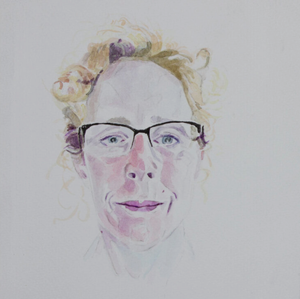
[PODCAST] Inside Netvvrk with Abstract Painter Ann Marie Auricchio
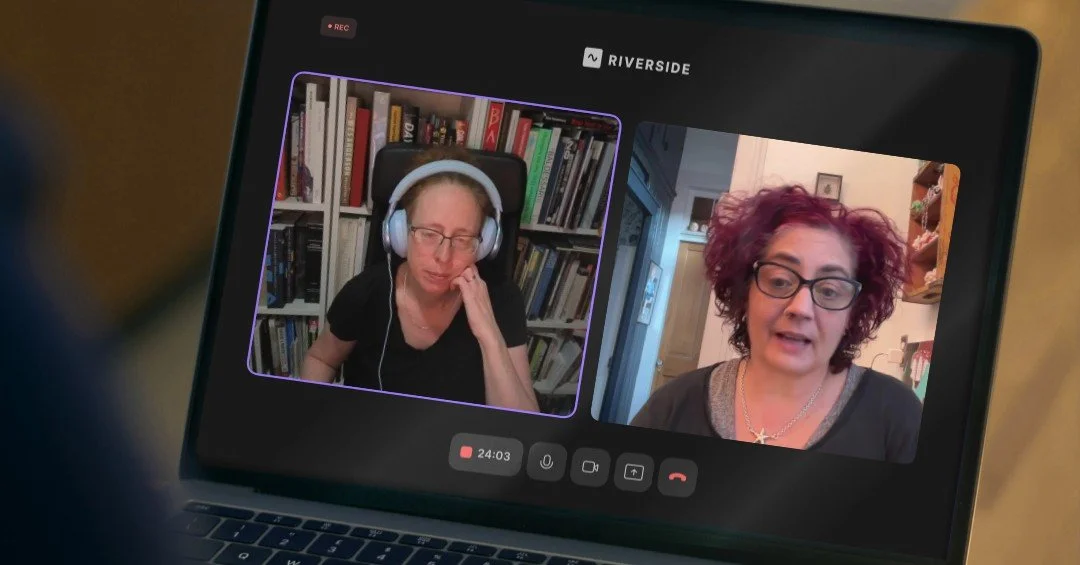
Left Paddy Johnson, Right Ann Marie Auricchio
This week on the Art Problems podcast interview series “Inside Netvvrk”, I'm talking with Ann Marie Auricchio, an abstract painter who creates work at the intersection of psychological and physical experiences.
Ann Marie shares what it's like to restart your art career after 25 years in another profession. She talks about why having all your materials ready isn't enough if you don't know how to use them, and how a shoulder injury became the perfect time to invest in herself.
We get into how she went from feeling stuck and isolated in New Orleans to landing her first museum solo show and working with multiple galleries. She also explains how writing exhibition proposals with other Netvvrk members led to actual acceptances—and taught her when to turn down opportunities that don't financially make sense.
We also talk about researching institutions by looking at other artists' CVs and why community matters even when people can be annoying.
If you're restarting your career or feeling isolated in your practice, this conversation will help. It shows what's possible when you get your assets in order and find your people.
Podcast Episode 98:
You are listening to the Art Problems Podcast, episode 98. I'm your host, Paddy Johnson. This is the podcast where we talk about how to get more shows, grants and residencies, and today I continue with Inside and Effort, an interview series where I talk to network members about. Well that if you haven't listened to my first interview with artist Laurie Frick, I wanna encourage you to go back and listen to that first.
It'll really give you a sense of the variation of experience inside the membership on this show. I talk with abstract painter Ann Marie Auricchio, and we get into some of the nitty gritty of mid-career. She shares what it's like to restart your career after 25 years in another profession, and why having all your art materials ready isn't enough if you don't know how to use them.
Ann Marie shares how she went from feeling stuck and isolated in New Orleans to landing her first solo show and working with multiple galleries. She also explains how writing exhibition proposals with other network members led to actual acceptances and taught her when to turn down opportunities that don't financially make sense.
We get into a lot of practical territory too. Researching institutions by looking at other artist cvs and why community matters, even when people can be, uh, really annoying. So if you're restarting your career or feeling isolated in your practice, this conversation shows you what's possible when you get your assets in order and you find your people.
And if you wanna do a deeper dive into building your practice, I'll be announcing my next live webinar this Wednesday. So I'm keeping this under wrap until the big day. But I do want you to know that this takes into account all the changes that we've been seeing lately inside the art industry, and will give you very clear insight on where your efforts will most pay off. So I think this is gonna be really valuable for all of you. All right, let's dive in with Ann Marie. Ann Marie, welcome to the show.
Ann Marie Auricchio: Hello Paddy, how are you?
Paddy Johnson: I am very good. So I wanna start this off by asking you a couple questions about network and how you found us and what you know about the program, having been in it for quite some time now. So I think the first thing I wanted to ask you is just how did I come across your path?
Ann Marie Auricchio: I think you initially popped into my Instagram.
Paddy Johnson: Mm-hmm.
Ann Marie Auricchio: And. Followed the link to your podcast and I started listening to your podcast and I got curious about network. From that Fast forward, I then checked out Network from listening to your podcast.
Paddy Johnson: Yeah. And what was going on in your life that made you think like, Hmm, maybe I'll check this out. Like what was your life pre network?
Ann Marie Auricchio: Well, I like a lot of people had another career for a while.
Paddy Johnson: Mm-hmm.
Ann Marie Auricchio: While 25 years for while, so around 2019, which really isn't that long ago, I really. Refocused a hundred percent back on my studio practice. Right. And so it was starting all over again. It was starting not just like the relationship to my studio practice, but everything had changed. Like the whole, like the whole art world. I mean, when I really stopped showing it was. We still had slides, you know, so, right. Yeah. Truth be told. So there were gaps of things like all of the assets, artist statement, website, like I had these things, but I was feeding my head against the wall, like not having things where they needed to be and Right. So I was just chugging along doing my thing, and I was starting to gain momentum in the studio and with some galleries and, but all that other stuff was still lagging behind. So I actually suffered a, a shoulder injury and I couldn't work at all for four months and
Paddy Johnson: Oh, that's rough. That's a, that's a pretty serious
Ann Marie Auricchio: injury. It was pretty, it was pretty bad. And.
Paddy Johnson: And what happened?
Ann Marie Auricchio: I got frozen shoulder, basically.
Paddy Johnson: Oh.
Ann Marie Auricchio: And from years of repetitive action. And it took four months of physical therapy.
Paddy Johnson: And this is like a pre menopause thing too, right?
Ann Marie Auricchio: Totally.
Paddy Johnson: Yeah. Yeah.
Ann Marie Auricchio: And so I found myself. Sitting around and I'm like, okay, this is a really good time, actually. Let me check out what this curriculum's all about and this is a good time for me. I couldn't type a ton, but I could watch all of the videos and then I could talk to type.
Paddy Johnson: Oh, that's smart.
Ann Marie Auricchio: Yeah,
Paddy Johnson: that's smart.
Ann Marie Auricchio: Yeah, I couldn't be making, I couldn't, I couldn't be painting, so it was sort of a great time for me to deep dive into the things that I knew I needed to do.
Paddy Johnson: Right, right. Yeah. So because of this shoulder injury and. Also, I think like where you were in your career, were you feeling like your career growth was blocked?
Ann Marie Auricchio: Yeah, absolutely. Yeah. You know, I also, I'm a New Yorker and my husband and I moved to New Orleans 10 years ago, and so I was also still building an an art community really.
Paddy Johnson: Right.
Ann Marie Auricchio: And trying to navigate that. And so. Network made a lot of sense for me. It, it was, okay, I can, I can meet other artists. I can meet other artists that are kind of where I'm at, you know?
Paddy Johnson: Right.
Ann Marie Auricchio: Well,
Paddy Johnson: yeah, I think that's a big thing.
Ann Marie Auricchio: I think that's a really big thing. Um, and that's exactly what happened, you know?
Paddy Johnson: Mm-hmm. Mm.
Ann Marie Auricchio: In fact, I came for the curriculum and I ended up with a huge community.
Paddy Johnson: Yeah. Well, so I mean, I actually think this is a, a big part of the question, right? Like, you know, in your ideal world, like when you came, like what would you have gotten out of network? Because it sounds like your, like what you were imagining was actually a little different.
Ann Marie Auricchio: Yeah, I think I went into it thinking there was, you know, a, a roadmap of course material, which there is.
Paddy Johnson: Yeah.
Ann Marie Auricchio: For, you know, getting all of your assets up to snuff, you know, really how to focus the language of your artist statement and get all of that, the nuts and bolts of that in the right direction, you know, cleaning up your website. Redoing your CV and your bio and you know that, all those basic things, right? But then also, once you've got all that together, how do you use it? Yeah. I think that's a real, that that was something that for me, I had to, coming back after a long time to the art world, it's like, okay, what do I do with all of this? How do I use it?
Paddy Johnson: Yeah. Yeah. I, I,
Ann Marie Auricchio: and that, that really is what I started to find from interacting with the other members and the other artists.
Paddy Johnson: I, I love that because there's, I think what you were saying on the one hand feels like. So obvious, but it's also something that we don't say out loud. Like, we know we need an artist statement, we know we need a website. Mm-hmm. We know we need these things, but it when it comes to like, okay, what do we do with it? Like, we often don't know the answer. And I think that that also explains why sometimes our artist statement. Isn't quite working because we don't know what we're supposed to do with it once we've got it right. Yeah. And that's very different than when you're working on something and you. Like, you kind of know what the end goal is for it.
Ann Marie Auricchio: Yeah.
Paddy Johnson: So I, and I also love that you've articulated that the, the use of those materials was very often, like how you used it, the community was something that helped you figure that out.
Ann Marie Auricchio: Yeah. I think the other, I, I do really wanna make a point of saying this is that I think the other thing that Network's huge strength is. Is allowing each person to figure out where they fit in the ecosystem of the art world, because there are so many directions. Yeah, and it's really, it can be really overwhelming and a little confusing, and I think network. It focuses you to, to, okay, there's this, there's this, there's this, there's this. And it makes you as an individual say, what do I want my career to be? Yes. Where do I feel like I belong? And. What does success look like to me individually? Not another artist that has this kind of career or another artist that has that kind of career, but it's, it helps you individually identify what success means for you and what path you should be taking to get there.
Paddy Johnson: Right. And when you were like just working all of this out. Let's go back just a little bit. Pre network, like did you, did you work with anybody else? Were you trying other solutions? Like how did all that work?
Ann Marie Auricchio: I think I had an opportunity to be in a co, a really good cohort at a residency that started to get my wheels turning mm-hmm. With some of this stuff. But it wasn't, it was the beginning of. Really acknowledging, oh, I, I've gotta get this stuff better,
Paddy Johnson: right?
Ann Marie Auricchio: And, and then about a year after that, I was a friend introduced me to an independent woman that helped with writing and applications. And I tried that. It was very expensive and I'm was not able to go that route and I didn't really think that it was a good fit. Right. And ultimately, you know, sounds great to have somebody write all this stuff, but the reality is you kind of just gotta do it.
Paddy Johnson: That's my feeling too. That actually is my feeling because like one of the things that I found when artists don't write it themselves, when, you know, they write a grant, somebody else writes that for them or
Ann Marie Auricchio: Yeah.
Paddy Johnson: You know, you can't repeat the language, so it's not that helpful for you. And usually there's something that doesn't, like, it's not quite right and you know it. Yep. Even if it sounds like kind of, okay. Mm-hmm. So like you end up sort of just papering over problems rather than coming up with root solutions that will take you a much further way.
Ann Marie Auricchio: Yeah,
Paddy Johnson: so I, yeah, I am a a hundred percent in a agreement with you on that. Now, before you joined, was there anything that made you hesitate? Because there are a lot of things I think that can make us nervous when we're investing in ourselves.
Ann Marie Auricchio: Yes, absolutely. And at, you know, at the time. I had a shoulder injury and was not working, so
Paddy Johnson: Yeah. That's scary.
Ann Marie Auricchio: Yeah, so I was, I decided to do a monthly membership and, and that was a financial decision in that moment, but I was, I also wanted to see if it was a good fit for me.
Paddy Johnson: Yeah.
Ann Marie Auricchio: And I might have done it for about four months that I was a member and. At the time, no, it was longer. I, I must have might've been, it might've been about that six month mark and it was the art fairs. Yeah. And I went down to Miami and you coordinated like a network members breakfast meetup. And we met and I met so many people that I still talk to now and I think, yeah, that really sealed the deal.
Paddy Johnson: It was really fun. I love that. I love that
Ann Marie Auricchio: meetup. Yeah. I love that. All of, all of the opportunities for in real life meetups have been amazing.
Paddy Johnson: Yeah. I really agree too. I mean, we're a virtual membership, but when we can take advantage of IRL opportunities, we do so, and we also have like some collectives that like the only purpose is for them to meet.
Ann Marie Auricchio: I know. In
Paddy Johnson: real life.
Ann Marie Auricchio: Yeah. I mean, I am now a co-leader of the Southeastern Region Group, and we're so spread out. Mm-hmm. Yeah,
Paddy Johnson: so that's hard.
Ann Marie Auricchio: So there's, I mean, it would be pretty hard.
Paddy Johnson: So what are the, like, so you're, you've been a member for a while. What are the tangible results?
Ann Marie Auricchio: I would say there's a lot of tangible results because once I got all of those assets cleaned up and repackaged, I had a lot more confidence to apply to things. That was something that. I had applied to some things in the past, but network really opened my eyes to the amount of opportunities there are through applications and how all of those assets are. A major part of doing those applications. And so now I'm on a regular, I mean, I just constantly apply to things. I, you know, I have a running list and I sort of have identified different times of the year that I do applications and I have everything that I need to do them now, and I'm, and it's just not as intimidating, you know, I have it all.
Paddy Johnson: Right. And are you applying to shows and getting into them or,
Ann Marie Auricchio: mm-hmm. You know, so that's, I'm applying to, I've been applying to exhibition opportunities and I've gotten a lot of them, not all of 'em. I, you know, I've applied to a lot of residencies, gotten a ton of rejections, got a couple of residencies, so, you know. There's a lot of rejection letters that come.
Paddy Johnson: Yeah.
Ann Marie Auricchio: But that's gotten a bit easier to navigate as well. Mm-hmm. Because you start to realize that, again, it's understanding the timing and where things are a good fit.
Paddy Johnson: Yeah. And
Ann Marie Auricchio: I'm, I really, I do see how much that is real in the application process.
Paddy Johnson: Yeah. So you've gotten a bunch of exhibition opportunities out of applications and sort of self-organization. Seems like you've also built community that you were looking to build. Are there any kind of other tangible results that were missing here?
Ann Marie Auricchio: I don't know.
Paddy Johnson: I think those are kind of the big ones,
Ann Marie Auricchio: right? Those are pretty big tangibles. Yeah. I mean, I've had, I've had some pretty big exhibitions that have led to exposure to working with galleries that I'm really happy to be with now. And I've met other artists that I've written exhibition proposals with that. We've been awarded exhibitions together. In fact, tonight I have to finish another exhibition proposal with another network member. So now it's, it's, I just feel like I am, I am in a community of people that are in the same place in their career and. We help each other and
Paddy Johnson: Yeah, it's
Ann Marie Auricchio: working. It's, it's absolutely working.
Paddy Johnson: I mean, and I think it's, it's worth pointing out here that like there's like, not everybody is going to be a good match for everyone, right? Yeah. Like one of the reasons that this works well is that the. Network is large enough that you've been able to find members who have painting sensibilities that pair really well with yours. And so if you propose a group exhibition or somebody like, I think there were network members that. Weren't there some network members who said, oh, you know, your, your work would go really well with dens and mm-hmm. You know, from that you made that connection and so the members being familiar with each other's work is helpful.
Ann Marie Auricchio: Absolutely. And I think. A key part of this as well is that, you know, sort of out in the world, even if somebody says, Hey, you know, there's another artist that I think you would pair really well with, it's a, it's not always easy to approach someone that you don't know. Yeah. Whereas if you're, if it's another network member. Then like that barrier's already. It just doesn't exist anymore. It's like,
Paddy Johnson: yeah, that's why we exist. It's a whole reason. Yeah.
Ann Marie Auricchio: Like, Hey, I've checked out your stuff. I wanna do this. And I mean, the other thing that's awesome is how many people are like, Hey, can I just call you? And I've had like random, crazy phone calls at, you know, all the time from other network members all over the country. And I love that that barrier has just been eliminated, right?
Paddy Johnson: That's such a nice story and I, I do think that it dovetails nicely into, you know, some of the intangible benefits of being part of network, which I think as you so nicely expressed here, like part of it is just having the ability to call somebody up. From somewhere else who has expertise or wants to talk to you about a specific thing, and you have that knowledge at your fingertips. Yeah, and I, I do feel like for all of the importance that, you know, having resources and curriculum and all of that available to you, and that is really important. Sometimes you really just need to talk to a human being who's been through the same thing.
Ann Marie Auricchio: I, I think I've connected with several artists that are later in their careers and then have become a bit like mentors, and that's, that's been really amazing because. You know, I mean, right on your, I mean, it used to be on the homepage it says something like, the art world's fucked up and
Paddy Johnson: Yeah. Yeah, yeah.
Ann Marie Auricchio: And and it is, you know, and it's hard to navigate some of our profession and especially when so much of it is this closed door kind of system, you know?
Paddy Johnson: Yeah, yeah.
Ann Marie Auricchio: Yeah. And so having people to have candid and honest conversations like, Hey, I don't think this feels right. I don't, I'm not sure this is, this is a good thing. Or it's not just venting or, or it's really problem solving with peers, like how to navigate through some, you know, kind of weird territory sometimes. The art world is difficult.
Paddy Johnson: Yeah, and it like, I think some of the reasons we like the art world is that it's weird, but it's also mm-hmm. I mean, that's a double-edged sword. We deal with a lot of things that like, don't easily resolve on a spreadsheet, right? No.
Ann Marie Auricchio: Like, no, because yeah, it, you know, we, we have to put ourselves out there. A lot of times at our own expenses and hope that yeah, in the end it works out and you know, we, we share all kinds of really practical stuff like. How do I ship this thing, you know, across the country, and I feel like this is really expensive. Does anybody else have experience with this? I mean, it's really like nuts and bolts, boring stuff, but it's kind of huge.
Paddy Johnson: Well, I mean, it really adds up. I, I can't remember whether it was you or Arden I was talking to about this. This is. For all of our listeners, this is Arden Ben Bela Brownie, a fantastic painter, and we were talking about how you had gotten accepted into a show, but it just wasn't feasible because they weren't really, I, I think the stipend was so small that you wouldn't be able to stay there, wouldn't cover all the shipping. And so,
Ann Marie Auricchio: you know, Arden and I, you know, when we first put together an exhibition proposal, we sent it to about six places.
Paddy Johnson: Okay.
Ann Marie Auricchio: And we have gotten two acceptances from that. And the first one in the application it said that they had a stipend, but when it really came down to it, it was only a few hundred dollars. And it would've cost us, like we figured out, it would've cost us like total like. Five or $6,000 to do the exhibition at least. Mm-hmm. So the, the, we ended up having to turn it down and the exhibition.
Paddy Johnson: But that's good for the institution to know too, right? Like if they want artists of a certain caliber. Yes. Like then they have to pay.
Ann Marie Auricchio: Yeah. Whereas the opportunity that we have accepted, and I don't wanna say too much because we haven't had our formal conversation with the curator and the director yet.
Paddy Johnson: Right. So, knock on wood or any kind of woodland
Ann Marie Auricchio: substance. Well, it's, it's a done deal. It's happening, yes. But I'm not sure if it's, we're hoping that it's the fall of next year, so we don't know the timing yet, but. There was enough support for us. You know, could it be better? It could always be better, right? But their stipend was good. They paid for travel, they paid for a photographer, they write an essay, they put out a color catalog, they pay for our accommodations. And so it was much more feasible for us. And then when I was.
Paddy Johnson: Also you can really build off that, right? Like if they're paying for a color catalog and all the rest, like those are things that you can send to other institutions, right. And use to promote yourself.
Ann Marie Auricchio: Yes. And then I found out another network member had had a show there two years ago, so I got to pick her brain. Oh, that's amazing. Yeah. So, and I had no idea. It was just when I was looking through their website of past exhibitions. And I saw it was there. It
Paddy Johnson: was
Ann Marie Auricchio: and there it was. And I'm currently writing an exhibition proposal with that artist for somewhere else, which is completely bizarre.
Paddy Johnson: That is really funny. I mean, I do, this illustrates a lot of things sort of all at once because one of the things that it does is it illustrates, like you just talk about the work, like it's something. One does, but I, I think a lot of times when people come in, there's this expectation that, you know, you don't promote yourself, you don't do, you don't send packages out to people or anything like that because it's, it's not gonna be good for you. And of course. If you send out a package that is not put together well, it won't be good for you. Right. That's, that is true,
Ann Marie Auricchio: but it's also, I, it wasn't something I did before.
Paddy Johnson: Right. Well, and
Ann Marie Auricchio: that's the thing. I didn't, didn't know anything about it. And yes, that is a definite, definite thing that came from Net, was being exposed to the right way to do these. Proposals, who is looking for them? How to find the people that are looking for exhibition proposals. And I didn't even know that was actually a thing.
Paddy Johnson: Yeah. Well, and I think the second part of this, so that's like part one, but also. You. I think as a naturally curious person, you are like, oh, I wonder what this person on network was doing. Let me like look at her cv. And then you see that she's shown at a similar place to you. Now I think that that is, should generally be kind of par for the course because if you're trying to learn the field. Then one of the best ways to do that is to sort of dig into other people's cvs and see what they're doing. Yeah. So you just get a better, like you're mapping out the, the world you're participating in and you get a, it gives you a better sense of orientation. Now you just threw that out like it's something. That like one just does, but it's also something that we don't always think to do. And so I think that that's really great to just hear that that's part of what you're doing because I think it's, it is part of the path of building. Your career as an artist.
Ann Marie Auricchio: Yeah. I, I think it also is, and again, this is from learning from all the other members, it's, it's one thing to just, you know, go and read through somebody's CV and say, oh, wow, that's, that's pretty great. Now I know. Okay. I wonder if some of those institutions. Some of these museums that are sort of smaller. I mean, we're not talking about the Guggenheim here. I mean, you know the Yeah, we're talking about smaller, more regional museums and university galleries, and if you see them on somebody's cv now I go, okay, that's a smaller, that's a smaller institution. I wonder if they take proposals. So then if I see, like I have a, right now I have a, a solo, my first museum, solo show at the Wiregrass Museum in Alabama. This is a small regional museum, but they take artist proposals and I was introduced to the museum through another network member and said, Hey, you should check this place out. They take artist submissions, went to their website, checked it out, and I said, okay. And so now I go to see theses of artists. Like I just looked up this artist who's showing at a gallery I showed at over the summer and amazing paintings. And I looked at her CV and I said. Oh, she's got a lot of small regional museums. So now I'm looking, now I go and I start looking at those regional museums and seeing if they take submissions.
Paddy Johnson: That's that's the way you do it.
Ann Marie Auricchio: And if it doesn't say that they take submissions. Now I have more confidence to look up if there's who the curator is, and then I will write a short letter. Little email. I was researching this artist whose paintings I absolutely love. I see that they showed at your institution. Are you open to taking submissions?
Paddy Johnson: I love it. It is a great, that is a great email right there.
Ann Marie Auricchio: So even if it doesn't say it right there. Now I think I understand how to crack a door open. On my own and have a little bit more confidence to do that.
Paddy Johnson: Yeah. So like what do you think is sort of, I mean, we've talked a lot about, I guess you, you know, your career and what it looks like now and how it's evolved. Mm-hmm. Like what do you feel is the best part of the membership in, in terms of like, if you could distill that for
Ann Marie Auricchio: somebody? Honestly, for me, it's the community.
Paddy Johnson: Yeah.
Ann Marie Auricchio: Absolutely. You know, because, you know, like you said, all of that curriculum is there, that all those roadmaps are there, and that's, that's like to get the ball rolling. But now I see so much of the value in the relationships that I've built, and sure, you can leave network and have a, you know. A handful of emails, but are you it? You're not gonna keep in contact in the same way like I am in different, what is it? The groups that we have?
Paddy Johnson: The collectives.
Ann Marie Auricchio: Yeah, the collectives. Thank you. So I'm in a few collectives and I don't make it to every meeting, but they're always on my calendar. And if I can make 'em great, I'm a codirector of one, you know? And. We meet on Zoom and I ask questions in the general membership all the time.
Paddy Johnson: Yeah. So I did wanna ask something about this because I mean, you sort of came in with the idea like, you know, I've, I'm in New Orleans, I. I hadn't made work, like I had this break. I knew I needed to build up my community. This was sort of a, a way of doing it. But I do think that a lot of people are like, Ugh, I've dealt with community and it's so annoying. And the reason I'm putting that out there is that I do think that community is amazing and it's managed and all the rest, but I do wanna acknowledge that you not like. People are annoying. Like that's just like that, that is the case too.
Ann Marie Auricchio: Yeah. People are annoying, I guess. But so my previous career, I, I worked with teams of people.
Paddy Johnson: Yeah.
Ann Marie Auricchio: And being, you know, going back to my fine art practice, I'm alone.
Paddy Johnson: Yeah.
Ann Marie Auricchio: And so I think I just really like. Even the annoying people. I think I just, I think that I'm a social creature. You are. And one of the, one of the reasons I, I, I, I worked in film and television and theater.
Paddy Johnson: Yeah.
Ann Marie Auricchio: And I, you know, that's a, a huge group. And there are multiple departments. And I mean, I was in, you know, the art department. I was a scenic artist and a designer. And, you know, it's, it's, you're only as good as your crew and you every day is sharing recipes and going through the trenches and pulling a rabbit out of your ass, quite frankly. And. I love that element of that job. I, I did. And so I absolutely love my time in the studio and I love, I love being able to finally have that solitude with myself and my work, but. I do like bouncing ideas around. I like sharing ideas. I like sharing experiences. I like sharing knowledge, and I like having a community of people that can feed back and,
Paddy Johnson: yeah, I,
Ann Marie Auricchio: me, it really, it suited what I needed as a person.
Paddy Johnson: I mean, I, I think like the thing that you said that really stuck with me is you're only as good as your crew. Because I do think that one of the things as artists and arts workers that we do wanna be careful about is just figuring out who are our people. And making sure that they're aligned with our values and you know, what we wanna get out of the work. And when that happens, I think you see a lot of progress. And so, and I think also when you forego a crew entirely, I think that's where people really get stuck. So,
Ann Marie Auricchio: yeah.
Paddy Johnson: One last question. Would you recommend Network to other artists?
Ann Marie Auricchio: Hell yeah, and I do.
Paddy Johnson: Amazing.
Ann Marie Auricchio: Yeah. Yeah.
Paddy Johnson: Alright, well thank you Ann Marie, I wanna, you know, you've been a phenomenal guest, very generous with your time it been and your knowledge. Um, it's been a pleasure and I will see you on the platform. Okay.
Ann Marie Auricchio: Take care.
Paddy Johnson: Thank you for listening. If you like the show, please leave a review and share it with a friend. It really helps get that valuable information out to more artists just like you. You can find all of the names and the links that we reference in this conversation at berksshop.art slash podcast.
Paddy