[PODCAST] Is the Era of Art Fair Spectacle Over?
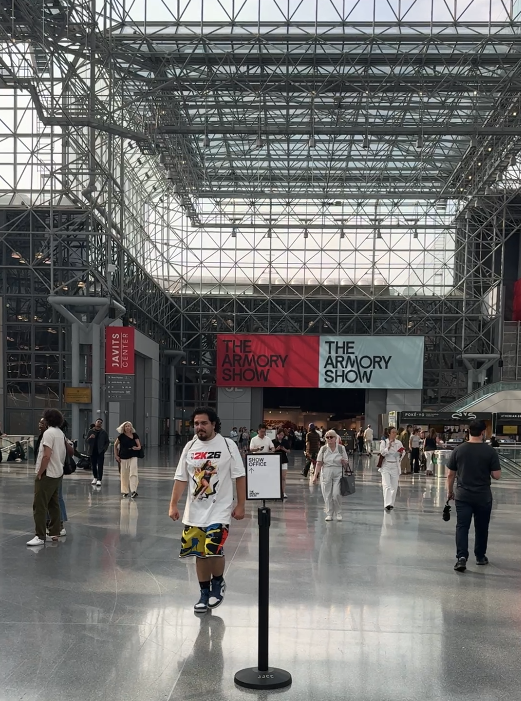
The Armory Show, 2025
VVrkshop founder Paddy Johnson and artist William Powhida dive into their impressions of the 2025 Armory Art Fair in New York. In this episode, we explore how Frieze's new ownership has changed the fair's feel, from stricter security to the notable absence of mega galleries like Hauser & Wirth and Gagosian.
We break down the numbers - more than half of 2024's exhibitors didn't return, LA galleries dropped by 26%, and smaller works dominated booths as galleries adapted to market realities. The conversation covers standout pieces that caught our attention, from Nick Farhi's provocative glory hole installation at Europa to Nikita Gale's politically charged "Interceptor" barricade at 56 Henry.
We also dig into emerging art trends, including the rise of "art history textbook painting" where artists render historical styles in abstract brushstrokes, and discuss the troubling vacuum in art criticism. The episode touches on the political climate's impact on art-making and whether we're seeing the end of an era for large-scale art fair presentations.
Relevant Links:
Tim Van Laere Gallery (Rinus Van de Velde)
Victoria Miro (Doron Langberg, Flora Yukhnovich)
Peter Blum Gallery (Marha Tuttle)
Europa (Nick Farhi)
56 Henry (Nikita Gale)
Yancey Richardson Gallery (Marilyn Minter)
Corbett vs. Dempsey (Cauleen Smith)
What If The World Gallery (Mia Chaplin)
Uffner & Lui (Talia Levitt)
Marinaro (Ever Baldwin)
Hess Flatow (Emma Safir)
Dastan Gallery (Tehran artists)
P40D Gallery (Piper Bangs)
Anton Kern Gallery (David Shrigley)
James Cohan (Simon Evans)
Podcast Episode 92:
You are listening to the Art Problems Podcast, episode 92. I'm your host, Patty Johnson. This is the podcast where we talk about how to get more shows, grants and residencies. And today on the show, the artist William Po is joining me to discuss our impressions of this iteration. Of the New York Armory Art Fair, we'll be covering the fair's new ownership under freeze, what the shift to smaller works might mean for artists and which pieces stood out in a sea of safe, market friendly art.
We'll also dive into some concerning trends that we noticed from the absence of major galleries to what feels like a critical vacuum and how we talk about contemporary art. Whether you're an artist thinking about fair participation or just curious about where the art world is heading, this conversation covers what we're seeing on the ground at one of New York's major art events.
Hey, William, welcome to the show.
William Powhida: Hi Patty. Thanks for having me on.
Paddy Johnson: Of course. So today we're here to talk about the Armory and Art Fair Week. I think both of us probably cumulatively spent the most time at uh, the Armory because that was the one place that both of us went to. And I think we wanted to start off this show by talking about our first impressions of the Armory Art Fair in New York, why we felt it was relevant to visit and whether. The what we were seeing is reflecting what we're hearing in the news. So William, why don't you start us off with what your impressions of the fair were?
William Powhida: Well, one thing that was different this year, this is the first year that I wasn't able to get in with like a VIP pass, or usually my dealer, Charlie James in LA gets me in. So it was a little bit of a sticker shock to pay the full like $70 with taxes and fees. To get in the fair, but, but is a bit of a professional obligation to go. And then on my way in, I just noticed that they were sort of a little bit more aggressive around ticketing and security this year, which was just slightly offputting.
I, I shared this with you earlier. Actually saw someone who may have been a collector sort of gently, sort of turned away for refusing to like, kind of drop her umbrella, which I get. But the manner in which it was conducted, the person just sort of left and they didn't stop to turn around. They were leaving the art fair, and that was just a slightly noticeable difference. And I wonder if there's some financial pressures on the fair to really cut down on that kind of generous ticket allowance or dealers letting people in. I don't know, but that was just something I sort of noticed right upfront.
Paddy Johnson: They're not owned by the same people. Right? Like they,
William Powhida: yeah, no, the Armory was sold to freeze and you know, so now Freeze is managing two fares in New York and Armory has shifted to the fall one, and that, that calendar's been moved around quite a bit over the last few years. Yes. But the flagship is in the spring for freeze.
Paddy Johnson: Right. So it's probably, I think it's quite possible that some of the changes that we're noticing in terms of the feel of the fair are really reflecting the new ownership.
William Powhida: Um, but once I was through sort of ticketing and security things that immediately jumped out, is that very noticeable? This year there weren't any of the kind. Top five mega galleries, which I don't think have done the fair for a few years now. No. Hauser and Wir, no Gago, no Warner Anchors. Those sort of big footprint spaces seem to be replaced by galleries like ACOM Contemporary. I think Victoria Moreau had one of the larger booth that I saw in the fair.
But one thing that was really noticeable as sort of a trend is that there weren't a lot of super big paintings. You know, notably, like Victoria Moreau had very small studies and modestly sized works by their artists in this huge booth. That seemed to be a sort of running theme, seeing a lot of works on paper, small to medium sized works, and within the, the overall range of works.
I mean things, I mean, I know this is the Armory, but it seemed, you know, quite conservative, a lot of sort of pleasing subjects with only the occasional outbursts of like weirdness. Yeah.
Paddy Johnson: Yeah. Get into maybe, we mean it's always, it's exciting when you see something even slightly weird at that fair. 'cause you're like, oh my God, here.
William Powhida: Yeah.
Paddy Johnson: Especially knowing the Javit Center, which as a venue itself is quite conservative. Like, you go into this place and it's just a ginormous mall. That only exists to host these types of conferences. So it's, it's certainly a lot nicer than, I think we talked about this a couple years ago, the, uh, peers that were just literally sinking, falling apart into the water. So there is. Definitely an improvement. And I do think that overall, like one of the trends that we've seen as the, I think, market kind of matures for art Faires is that the level of venue has definitely like an amenities that, that those venues offer has increased. So you have these like nicer spaces, but uh, there's kind of a trade off here, right?
William Powhida: Yeah. I mean, and I think it'll be, it'll be good to sort of, um, see if this bears out. I know Patty, you've put together some of the numbers between. That participated last year and what the turnover and change was this year. But my impression is that in that job at Center Armory just feels a little bit too big at this point to continue to be supported by both the kind of new commercial gallery actors they brought in, but also so many smaller galleries and even the kind of mid-size galleries that are in this case are selling.
Small to medium sized works. And I don't know if that price point, both on the emerging end of smaller galleries and mid-sized gallery selling modestly sized works can really support the current iteration of like the Armory Fair model. You know? So if I had to make a prediction about what sort of coming, I wonder if Freeze might possibly shut down Armory and focus really on its namesake flagship fair in the spring.
Or think about some kind of spinoff, because I thought the strongest start this year was in the kind of like focus section among the emerging galleries. And I think unless some sort of miracle happens politically or economically, I think this might be the last year we see armory at the Java Center because. It's such a big venue and it definitely felt thin this year.
Paddy Johnson: Yeah. So I mean, I think I would be really surprised if they shut down the armory fair because with that many exhibitors of course, and I've, there's definitely a couple hundred, like there's good, that's a significant business. Um, but whether they're gonna stay at the Javit Center, I think does seem to be a question now. One of the things that we both talked about when we were there is the sort of mood that I think took over that space and I was, I don't know what, maybe you just expect the same thing you saw the year before, but the conditions of the market hadn't changed so significantly. Like it sort of felt like leading into this fair.
Every other news story was about how something else was being shut down. So I was expecting a mood at the fair that. Would not be so friendly. And last year I was there and it really felt like a death march. It was so sad. This year I did not have that feeling like the people I talked to were doing pretty well. It seemed like sales were being made. We talked to people who purchased things at the fair. I mean, of course these, you know, I always have to make the requisite disclaimers like. This, we don't have revenue reports. We really don't know how well they did. We have the few people that we talk to, which is not a, not necessarily a representative sample size of the sheer volume of exhibitors, but that was the way it felt to me. It felt like not as dire as the year before.
William Powhida: Well, I think you, you, what about you? I mean, I didn't get a sense that there was doom and gloom happening. I just think that if there were sales happening, it was probably because the inventory that galleries had brought were smaller works, things that might be slightly more affordable.
But last year it was sort of before the election and this year we're into the kind of really bad sort of political economic environment. There's not the dread of like waiting to figure it out, you know?
Paddy Johnson: Yeah. So that's really interesting. I mean, I think if I were to sort of expand on what you're saying, it sounds like the difference between this year and last year, just taking the very narrow art perspective, is that maybe we know a little bit more. What we're dealing with. And so a good example of that is that Victoria Miro booth, which still represents a kind of in-between state where she brings the smaller works, small to medium sized works, because that's. What's selling, but she has this ginormous booth, which is, you know, something that was probably secured, uh, before really knowing exactly what, what works.
I mean, of course if she sold a lot in that booth, maybe the real estate was worth it, but it, it still looks a little bit weird. So it feels like we are, we maybe know. What we're getting a little bit more, but like the clothing doesn't quite fit stuff. Just little previous, yeah. Midsized.
Paddy Johnson: Yeah.
William Powhida: Yeah. To the booths. And I mean, Victoria Morose booth. I mean there was, you know, basically two to three walls of like nine by 12 ish sort of. Studies by the artist do Langberger as opposed to the like 80 by 96 paintings that are featured on the Gallery's website. So it was a very sort of conscious, market based decision. I would, I would imagine.
Paddy Johnson: Oh, I'm sure. And I do think one of the things that happens of course, is that the people who did bring very large works, they really stood out. You know, like, I think the first thing I took a photograph of because it stood out so much, was a painting that was 130 inches wide, because there's a, you know, so little like that at the fair. So I, I do think that, uh, you know, what we're seeing is, uh, kind of representative of the market trends that we've been hearing a lot about. And
William Powhida: did you have any other kind of, um, takeaways just from the overall kind of experience of spending time at Armory this year?
Paddy Johnson: Yeah, well, you can sort of see that the organizers are aware of what they have too, right? So when you come in, the first thing you see at the entrances is that they've walled the entrances off with the, the bigger named galleries, the, the more blue chip you work and. The further out you get to the sides, the less of, less there is of interest, and the more you sort of get into some of this work that feels a little bit like filler. Mm-hmm. So when I was there, I also, I had the impression, and I wasn't sure about this, but I had the impression that there were fewer LA based galleries and that was just. Because I remembered seeing a few bigger names there last year and just, I didn't necessarily recall exactly who they were, but I was like, where, where are these bigger galleries from LA that I am used to seeing?
And then of course when I ran the numbers that did bear out, and we can get to that in a second. The other thing I also noticed was that there, I mean. The Armory and art fairs in general, I think have never been particularly hospitable to nonprofits, but this year it seemed really pretty thin. Like all you had were the printmaker print shops, which have something to sell, and a handful of academic institutions.
That were also promoting something. And beyond that, we really didn't have any of the like creative time. Even Aperture wasn't there. So this feels like the nonprofits at least are really like, Hey, this isn't paying off for us.
William Powhida: Either it's not paying off for them, or you know, there's not the opportunity to maybe kind of like subsidize their participation with like a lower price point booth. I, it was noticeable. I mean, even the wall text for that section, it was just so few. I had to count it out. This was my data crunching of the fair. But it was just nine small booth that were participating in the nonprofit section, which just seemed really sad. Like the plant around it was bigger than the list of names. It's almost like that's true. Just move that plant in front of the list. Maybe there's more. I, I don't know. It was noticeable that more than just walking through the section, you know? Yeah. So that felt very true.
Paddy Johnson: So in terms of, uh, numbers and things like that, I, I thought we could go through a little bit of that because Yeah. One of the things that I did in preparation of this podcast is I compared the 2024 participants to the 2025 participants so that we could see whether the impressions that we both had were born out by the numbers. So when I did that, I found that more than half of the exhibiting galleries from 2024 did not return in 2025. Hmm. That, to me suggests that 2024 was the death march that we thought it was. Because you're not gonna come back if you don't think you're gonna make money. They lost about 10% of their exhibitors overall. There was a 26% decrease in Los Angeles galleries. So, you know, I think we had a conversation about whether there was more international galleries or less, but actually stayed exactly the same.
That was the one place where there wasn't any turnover at all. Everybody who participated last year came back, but they didn't gain anything. Mm-hmm. Uh, so there were no new in international galleries. And I went through, and this is just sort of like looking at the galleries. These were my impressions of where their losses were. So I thought that the biggest losses that they had in 2020. Five were like, these were the galleries that didn't return that I thought were pretty big names. Night Gallery over Dwayne and Co. Jessica Silverman, SP Westwater, uh, OIA Berg. Leman Mopan White Chapel, Jeffrey Dech, and a few of the, uh, nonprofits that we mentioned.
Creative Time and Aperture. And then their biggest gains I thought were Tanya Bonar Gallery. Anton, Kern Gallery, Andrew Krepps, James Fuentes and Michelle Chen, which to me suggests that the, the place where they were able to make up any kind of ground was New York. So anybody who didn't have to pay for shipping Yeah. Like, or that much in terms of shipping, it was still advantageous for them to participate. So I think. Overall, the impressions that we had just in terms of participation, at least to me, made sense.
William Powhida: Mm-hmm. Yeah. And I mean the, the sort of first statistic you cited of like a kind of 45% turnover, that really does sort of break the kind of rule of thumb that I've heard that it's, you know, usually. There's like a third of the galleries turnover every year. So 45% seems pretty high. Oh, it's close to almost half. Yeah.
Paddy Johnson: I didn't realize that it was a third. That's, yeah, that's pretty big.
William Powhida: Yeah.
Paddy Johnson: All right. So I think both of us had some like works that we thought were worth talking about, and I wondered if you wanted to just talk about a few of those.
William Powhida: Yeah, I mean, I think it's interesting. I have a, you know, it's not a terribly long list and there's a couple of kind of themes that sort of emerge, but maybe I'll just sort of start with one of the first galleries that jumped out at me that I was interested in sort of photographing the work. But it was, um, Tim Van Lair Gallery from Antwerp and Rome showing the artist r Vanderbilt, and he knows this kind of okay. Belgian artist doing this expressive Bay area kind of esque scenes in pastel with these sort of pithy captions. You know, one of them read, I have never been courageous at all. I even wear seat belts and taxis on that kind of guy. And you know, there were some of the bigger works in the fair. Yet, one thing I noticed is that they were also works on paper framed and that made it sort of.
Makes sense with the rest of the work that I was seeing that these wouldn't be works on Canvas their their works on paper. Yeah. And then their gallery is maybe, I saw them at Armory last year and it was one or two of this artist paintings, but this year there were, I think a whole solo booth. And this is a gallery that represents Jonathan, me, ed Templeton, Peter Roge. So it, you know, I thought those sort of immediately jumped out, kind of set the tone. One thing that jumped out at me that I, I didn't really expect to see was that Peter Blum gallery, Mara Tuttle had what I would sort of term like a return of zombie formalism. Uh, the painting, the work was called Relic Weary, and they were just sort of gauzy fabrics stretched a little ha had ha haphazardly overstretch your bars.
And it kind of, I almost thought that the market had sort of moved away from this, but, you know, it was sort of back and uh, immediately jumped out. I think one thing that I also stopped to take a picture of was some work by an artist named Alejandro Cardenas. Uh, not one of the, I think, LA galleries, but this painting like Helix. It was just so close to the kind of historical surrealism that it was referencing. I, I couldn't really call it like the sort of atemporal mashup of styles. It just really felt like a kind of sci-fi tinged homage to surrealism. I make this point because it, it's different from another kind of trend that sort of popped up, you know, that people have been talking about where artists are sort of taking historical styles, like Rococo or Baroque paintings, but then rendering them in this kind of like expressive abstraction where you don't really get to a subject, you just get to the kind of brush strokes and the materials.
You know, you really see a kind of abstract painterly language, but it feels very familiar. Um, right. You know, and, and I think like maybe that was best or I can't say it's good or bad, but I would say one of the examples of that was from an artist named Mia Chaplin. What if the World Gallery, which is out of Cape Town and Toba. And so I think her work kind of represents this, right? Like. Again, artists who are very clearly borrowing from historical works and Mia, you know, these look like she's in, in her case, it looks like she's rendering nudes in the kind of very heavy frank Hourback in very heavy brush strokes and thick oil paint.
And when you get up close to these things, they just kind of break down into the component marks. But I guess what's happening here is it's sort of like a double dose of art history. It's both like a historical subject that could be a real painting that's being referenced. Then it's done style I would associate with abstract expressionism almost. It doesn't have our backs commitment to like rendering the figure. Um, so this kind of moves it even further from the present. And I guess that kind of work, uh, I would just kind of wanna stay away from generally. I just, it's, I, I am. Really interested in the idea that artists can work sort of a temporally with styles from across periods.
But this kind of specific way of borrowing from Rococo and then representing it in abstract marks maybe is, you know, captured by another artist from Victorian Flore. You can, you can avic. Do you know her work?
Paddy Johnson: No, but I wanted to like interject and. Ask. I don't know if you'll remember this 'cause there's so much to remember, but Emma Sier at Hess Flat plateau her work. She had these like really small, beautiful, textured fabric works that kind of look a little bit like the bottom of the ocean. So she'd use reflective fabric, reflective thread, these like pewter casts and they were all kind of quilted and there's kind of this like. Broke aesthetic that is paired with sentimentality.
And there's also an allusion to the domestic, which I felt was another theme that I saw. And so I don't know whether that like fully fits into the borrowing of art, sort of historical movements, but I had a couple of people where I was like, oh yeah, this, this references that. Yeah.
William Powhida: I mean, um, flora Vic at Victoria Murrow, I mean these really look like a Rococo painting that had just been sort of like run through an AI being tasked with like rendering. And actually I maybe ne Rococo is the wrong one. Her painting looked a little bit more like a Neoclassical painting, but just make it with large brushes so it has this kind of low resolution. You don't actually get the subject matter at all. They're all just sort of rendered in what might be like a quick sear or a blob, and yet this is something that I'm seeing at other galleries. I think, I forget the artist's name, but I think David Werner is now representing. A young male artist whose paintings look to kind of follow this exact formula, and I've seen it now in galleries, now at Armory and in some of the artist studios that I've worked with at different kind of residency programs.
And I'm just kind of really curious why this particular trend is sort of emerging. I don't have necessarily an answer, but. I think, you know, that idea that there's like some sentiment sentimentality involved or there's a bit of nostalgia. It also seems like one of the most, like the safest, most kind of conservative or market friendly trend I've seen. Like yeah, you're getting to have your abstraction and like based on a figurative reference, so it sort of solves that problem if there was one. Yeah,
Paddy Johnson: I've, I've definitely seen that too. This is, I think this is slightly different, but at Ner and Lou Talia Livet. Uh, she had this like giant piece called Making itself, and it was acrylic on canvas and it was, it had some of the qualities you're talking about, like, it's kind of like a more textural syrah, it like apes fabric with paint and it's a interior domestic scene with like very large windows on either side of the canvas. And you kind of see these figures each with these three figures, each with paintbrushes and it kind of looks like they're constructing the world around them. And so like her particular point of view as, uh, like I think she draws upon her family history, which was in the garment business. And you can definitely like.
It definitely looks like she has an interest in fabric, but there is also that kind of, um, mashup of like styles and textures, that sort of thing. I, I did not think of when I saw that work, though. I did not think of. Ai. And so I do think that that work at least would be a little bit separate. Part of that was because it was, it felt so connected to the material world. Mm-hmm. But also it was a little bit stranger than like, Hey, I'm integrating a figure into this like landscape and here are some ghostly figures. Like it was just really. Weird. And so you could see a construction of narrative that felt more human.
William Powhida: Yeah, and I mean I think something that broke with that sort of kind of approach to painting that I was sort of talking about might've been an artist named Piper Bangs showing at P 40 Gallery. Also from la the artist had a much more sort of interesting take on a temporality or sort of borrowing from the past. The work definitely looks like a kind of soft focus Rococo style, but instead of like abstracting it completely into generality and sort of just. Non-objective abstraction. Uh, the artist was sort of painting these little penis, like creatures blowing semen, like tongues into the air, and they were just sort of wonderfully bizarre, you know, and sort of borrowing some of this kind of approach to painting.
But there was still a kind of subject, a little humor, definitely weird, and it was just a kind of like, stop. Like, what am I looking at? This is not like that. Like
Paddy Johnson: William, our penis is in the air. I,
William Powhida: there was, there was definitely some penises. There was, uh, some other,
Paddy Johnson: I think on our related boots, we had a, we were looking at, um, an image by, uh, like a drawing by Ken Price too, right? Like that? Yeah. Um, had some like weirdly arranged penises.
William Powhida: Well, I think a really easy segue then would be to talk about the booth at Europa of Nick Far. He's, um, work, which was a solo installation, basically dedicated to the history and queer pleasures of the glory hole. You know, had a kind of like bar lighting fixture over the, uh, dealer's desk, and it sort of set up the tone for the booth, which was painted very dark color. Featured portraits of men and it had these sort of beautiful like luminous paintings that might have been of like a bar window. It had a straight up men's room stall with stickers on it, with the kind of aforementioned glory hole painting, I think right in, in the space. You know, this was something that our friends, Barry Harger and James Wagner Wagner pointed out.
And so I think actually it was really one of like the strongest exhibitions within the fair. And you know, there were certainly a number of solo presentations and like the focus section, but Nick's work really stood out. You know, I thought the paintings themselves were interesting, really well executed, and the overall installation was really just super compelling. You know, it really stood out to me as one of the stronger. This year.
Paddy Johnson: So speaking of, uh, I guess let's say. Uh, sex and Desire. Uh, one of the things that stood out to me, I think just because of the visibility of the artist, was that Yancy Richardson had a 2020 Marilyn Minter photograph and any Oh, yeah. Like, anytime you see a Marilyn Minter, it like sticks out. You, you can't miss them. And this was a woman with, uh, like red lip lipstick lips, like pressed up against the wet glass. And I felt like this was one of the more interesting compositions that she has of these series because of the way that the eye in this one was cut off because it was almost like this woman had. Only one eye and the other one was just sort of cropped off on the side. Of course, the eye is closed. And this made me after the fact, I started Googling her images because I started to wonder like, what would it look like if this eye were open? Because you never, like, they're always pressed up against the glass, so it makes sense that they were closed.
So when I did a Google search, I saw that. She actually has a fair number of images where people have their eyes open, but they tend to be like more identifiable images where she's painting celebrities. And I realized when I was looking at them that the less identifiable the images are as actual people, the more engaging I find them. And. I think that's because I find identity distracting in her work. Like I think the best of it kind of removes identity and only leaves like sex and sexualization. It just feels like a more focused kind of work. So, um, anyways, I was just kind of happy to see that work because I hadn't had a chance to think about it. In any kind of serious way, and it's actually one of the reasons I really enjoy this podcast because if I didn't do it, I wouldn't sit down and like think, okay, like why did I take a picture of this? What do I think about it? So,
William Powhida: yeah, and I mean, Yancy Richardson's Booth in general is one of the sort of few that focused on photography. And when I saw that Marilyn, my first, my first take was, oh, it's a new Marilyn painting. But then I was like, wait a minute, this is, yeah, the resolution on this. Oh, it's a photograph of her work. Yeah, and I, I think it works really fascinating because when it's dealing with desire, the mirror still functions this kind of like self reflexive me mechanism. Yes. That this is ostensibly a woman looking at herself, and in this case the identity. There's no celebrity, you know, you're not really thinking about that. And it allows you just to kind of be in that space with the sense that you're not totally a voyeur, you are put into her position looking at yourself. So. I think her work is, is complex in a way that I think is useful. You know,
Paddy Johnson: it's true. I mean, all of the things you're saying, remind me of that. It's like a slow motion video that she produced. Gosh, I can't remember whether it was maybe like 2015 ish. I can't remember the name of it, but you see this woman's feet. And high heel shoes, and she's like stepping in. I, I think it's like aluminum, like water, if, I hope I'm remembering it properly now. But I mean, one of the things that's always, I think most interesting about the work is that there's always an edge to it. There's always something that's like pretty ugly or something that's just, it's just a little bit off in a way that.
I think. Is nice. I mean, I was talking to another artist today, Travis Leroy Southworth, and like one of his, like a lot of the work that he does, he's a digital artist and he removes, he has a series where he is like removing blemishes. This is 2000. 10 to 2015, or just to give you a sense of like the context in which he's doing this. Right. So he is like removing blemishes in his day job and then makes that part of his work and he is sort of collecting them. But when we were talking about it, he was talking about how he was like you, he was just removing all of the things that make somebody individual and unique and that I think like that's.
Something that within. Marilyn mentors work like it's not really about that, of course, but there's always something that's really specific about the work that I think, and like individual that feels like it pushes against the digitization of everything.
William Powhida: Yeah, it's, it's amazing that one work of kind of sufficient complexity by a mature artist can stop you in your tracks. Yeah. And especially in a fair where there's hundreds of booths, thousands of work competing for your attention. And her photograph was just positioned on the exterior wall of the gallery and it was. Just one that I definitely stopped and took a look at, and I'm glad we kind of have this conversation about one work that we both saw.
Paddy Johnson: I know.
William Powhida: Um, yeah. Yeah. So I mean, credit to Marilyn, I think those images are, are amazing and you know, the difference between a painting and a photograph, I mean photograph, I'm not even quite sure, uh, that would change the nature of the conversation. Before I, I forget, one of the other sort of like very strong solo presentations was by an artist named Colleen Smith at Corbett. First Dempsey, and they're outta Chicago. But I thought this was a good kind of like parallel booth to Nick FARs show at Europa. I mean, there were kind of record size cover square works on paper. They, they echoed a little bit of like Shalene, the artist Shalene Rodriguez, her colored pencil drawings on black paper, which tend to focus on full life-size figures from her community.
But Smith is working with black pop cultural references, music musicians, and she uses these kind of intense neon colors that really just kind of burst and pop off the page. And so it made incredible sense when sort of turn and look at the rest of the booth. And there's one of the few large scale Neon works in Armory and Neon has been ubiquitous at Art Fair is usually a line of text or a phrase, but this was an interesting kind of shaped neon piece and it, it definitely stopped me in my tracks. I got up to really look and inspect the drawings and spend some time with them. And it really stood out as again, one of the kind of like stronger booths and solo presentations in the fair for me.
Paddy Johnson: I dunno if you saw this, my guess is that you did, um, Nikita Gale at 56 Henry, she had this work probably like if I describe it, you might know what I'm talking about. It's an entire booth made of like metal studs, wires. Oh yeah. And tripods.
William Powhida: Yeah.
Paddy Johnson: Right. So, um, I think that was like one of the booths that. Would be difficult to miss while you're there. Um,
William Powhida: no, it's impossible. It's a miss.
Paddy Johnson: Yeah, it like takes up the whole booth. It's like on a diagonal line. It's just like a mess of things. It's titled Interceptor and of course it stood out for me 'cause I was just like, well this seems a little risky for a fair like this. Right? Like I. I don't know, like 30 minutes later I had a conversation with somebody who, with a dealer who was talking about how in this environment you can't raise prices and like, I'm just like looking at a sea of landscapes. You know, when here's this piece. Even if you don't know what it is, it immediately feels political, you know? Mm-hmm. Oh yeah. And it references 19th century barricade design. And it's, uh, described in the press release as examining the infrastructure of crowd control, which you can kind of feel in the piece because it's sort of, it has this, uh, it's a corner booth and.
The diagonal of the piece, it's just structured so you can't enter the booth at all. Uh, so it's very imposing. I just felt like that piece seems so relevant, especially in the wake of the, uh, assassination of Charlie Kirk, which happened just a few hours before. We're recording this podcast 'cause you know, nothing good. Is gonna come of that, and of all the pieces that I saw, that one seemed probably the most relevant to what's happening. Around us. And I guess the other thing I feel like I, I don't know whether it's like, I just wanna say about that is that sometimes, at least for me personally, it can feel a little bit like we're afraid as a community to talk about what's happening. Mm-hmm. In public forms. And so to see something like that, there felt like just a relief, honestly.
William Powhida: I, I agree because there was, let's say a lack of sort of politically engaged art. You know, I was glad to see some humorous David Ley pieces, but there wasn't a lot of work sort of tapping into political anxieties. Like I said, my feeling was generally there were a lot of landscapes and still lives very colorful. Places that I would like to be. Yeah. And a piece you're describing that definitely stopped people in their tracks and it's an impenetrable booth and peace and it evok everything from, and this is like January is piece where we are. Right? I mean like seeing the tripods and thinking about the media and the way that they're sort of implicated in this because it's not like police batons, right? It's these other things within the kind of like aluminum structures and that are comprising the kind of main barricade. Is this implication that it has a lot to do with the way protests are represented, you know, in the media and just, I, I, I do agree that there is a sense of kind of like paranoia about speaking about political subjects right now, particularly in the wake of Gaza.
Paddy Johnson: Yeah.
William Powhida: But you're right. I, I just learned about the Charlie Kirk assassination. Apparently he was shot from afar. I don't, you know, like versus Yeah, sniper. Artery and his neck. And I, someone had to remind me who he was. I didn't realize he was the kind of guy who would infiltrate organizations and try to get people talking about, I don't know, to make kind of like gotcha documentaries or something. But he was not somebody I immediately was like, oh, you know, he took me, I mean, he was not a, he was not a friend of the left, that's for sure.
William Powhida: Yeah. You know, I'm not gonna, uh, cheer for anyone being, you know. No, no, no. But it's, uh, yeah, it does not, seems like the beginning of a, a period where it moves from, we're not gonna end up in Alex Garland's civil War immediately, but the, the move towards protest and violence doesn't seem far away, you know?
Paddy Johnson: Yeah, yeah. No, that's something that's, that's something that's, that seems like it's coming. You know, I, I will say. Art fairs really historically for as long as the art fair has existed, I think it's pretty much always been a bad place. For, or not bad, but like, maybe let's just say in a hospitable place for political art. And you know, I, I think there's reasonable reasons for that, right? Like a lot of people don't wanna be thinking about that in their home. But it was really nice to see that work. And I noticed when I was going through all of the work that I had selected, even without knowing it, there was, I really gravitated.
To work that was exploring. The female form in one way or another. So an example of that was ever Baldwin shaped frames around more square pictorial canvases at Marro. Here the frames evoke the female form, and so there might be one that's like a torso that looks like it's cradling, a painting of the night sky or a torso around the frame of a corset. And there was a sort of. Clever use of repeating shapes that that reinforce the feminine. And so I really like that, especially right now, and it's not specific just to women, but women's rights are really being pulled back. Their ability to control their body. A lot of ideas around. Female identity are, I feel very much like, I don't know, just like they're closing in on me. You know, like it feels very claustrophobic. And so to see a shaped frame like that, that like cradled these ideas. Really literalized how I feel in this particular moment as a woman. There's just a lot of, you know, maybe you could say that it just continues the trend of like material based work, but because this has been something that's been in the, in the air for the last couple of years, but a lot of the things that I took pictures of.
Were materially based and speaking like sort of specifically to the female form?
William Powhida: Yeah. Well, like even the way you're describing that work that was at Marinara Gallery, I'm pretty sure I saw the work, but it's so different from. Some of the first work I talked about, Maro Tuttles just kind of fabric stretched over, you know, your traditional structure bar. Yeah. That didn't seem to change. The kind of proposition that this could be shaped canvas or form that references the female form, allow you to have that response to the work and bring your subjectivity to it in that way. This was just almost a kind of very formal approach. Echoing, like support phos or something, you know? So it, it's. Encouraging, I mean, as far as seeing kind of female representation, paintings of bodies, I mean, one booth that did jump out was Dossin from Tehran. And so seeing images of women painted by women from Iran, which is very conservative re regime obviously it was, it was just nice to see. I mean, I, you know, there was two artists, uh, showing one body of work was much more abstract.
The other body of work was much more directly figurative representations of female bodies. And there was an interesting sculpture sort of corner of the booth, but it, you know, it was one of those that stood out amongst, I think there was another show by the artist, um, Shirley Villa, CIO ISO at Gallery, Sophie Vanderbilt. It had these kind of like awkwardly rendered portraits of women, you know, sort of sitting in domestic spaces. And when I saw it, I couldn't quite place it for a minute, but it, it sort of echoed the work of Maria Barrio at Hauser and Wirth who has these lar like very large scale, you know, uh, figurative portraits done with collage, very colorful.
But the thing about the rendering of the figures is that they tend to be almost a little like de-skilled. Mm. They're sort of. A little blocky, maybe evoke a little bit of Henry Taylor, but they're, you know, rely more on kind of outlining the figure and layering in washes of color or pattern. But it was something I noticed just in terms of the kind of like figurative work that, that sort of approach, which is different than the way that talking about the work at Marinara, where it's really much more an abstract reference to the female body.
Paddy Johnson: Yeah. Yeah, yeah, yeah. So I think in, in summary, what do we think are the, I think, trends moving forward that we should be paying attention to if we were to like. Distill all this down.
William Powhida: I guess I'm really thinking about Ben Davis' recent piece where he talked about the blurry, this idea that, yeah, we're in a kind of post medium environment where traditional long form art criticism is turning into TikTok videos or just getting mashed up in in ways that are sort of. Strange and bizarre and getting further away, I guess, from thinking about art, thinking through art in writing, and I guess with some of the trends that we're seeing, like this kind of art history, art, historical references being turned into sort of large scale abstractions. Where they're being generalized and there's not really any subject left in the work.
I'm just curious if there will be any sort of critical response to this work or if it's just gonna kind of do well in the market and nobody is gonna talk about it. And so I guess I'm pointing to, I'm just kind of curious about if we're gonna see any kind of return or just a, a little bit of a critical response to a lot of the kind of trends we're seeing in the market. That's just one sort of like question or sort of. Takeaway I have after kind of seeing more of this work, you know, at AT Armory.
Paddy Johnson: Yeah, I mean, I think I have that question too. And this does continue on a conversation that we had off podcast, but there really is a vacuum of criticism and you can. You can feel it now. You know, for a while it just felt like it was kind of slipping away, but there were places for it. Whereas now it just feels very, very difficult to access just critical responses to art and think about things more deeply. And I do think that that reflects the world that we live in, right? Like we, it's not. Like social media is bad for us and we know that, but we also are living in this world now where it just feels like we are in the throes of authoritarianism and it's really difficult to operate under these conditions. And so, yeah, absolutely. Uh, there's just a lot of unknowns right now. We don't know what things are gonna look like.
I mean, we don't know what things are gonna look like three months from now, and I think that that inevitably has an effect on what we all make.
William Powhida: Well, yeah, and I think based on what we were seeing at Armory and conversations I've had with other artists who participate in art fairs with their galleries, one recommendation might be don't overly invest in very large scale works unless you're gonna be showing those in the gallery proper. Make sure that you have some small to medium sized works. Make some works on paper, do some additions, because generally that might be what you're gonna get asked for, for the fair circuit, for the foreseeable future. Totally different story in, if you go over to Chelsea, you will see a lot of shows with very, very large scale work. Very, very large work. So yeah, the blue chip galleries are still bullish on that, but certainly that did not, was not reflected at the art fairs, both in the lack of participation of like Hauser and Wir. And in even the bigger galleries that we saw, there were definitely less larger scale works.
Paddy Johnson: Um, I mean, I will say that there's a little bit of a gap there in terms of what I'm hearing and what I'm seeing on the street, right? Like, I mean, I spoke to a friend of mine who, um, is a, a financial directorate, one of the larger blue chip Chelsea galleries, and he told me like, all they're selling is like mid-sized work. So I don't know if like what they're using to fill their showrooms. Which are ginormous has to be large work, but the stuff that's selling in the backend, it's more reflective of what we're actually seeing in the fares or
William Powhida: Oh, absolutely. You know, and the, these galleries are planning, their exhibition calendars out years in advance, and so we may be seeing the end of a wave of very large scale production by artists. Yeah. So you know, Chelsea Tribeca, they may look a little bit different next season in the fall when we open.
Paddy Johnson: Alright, well on that note, William, I wanna thank you for coming on the show. I think we've had a great conversation and we are going to continue it in the next couple of weeks because we have, we've been planning in behind the scenes, another conversation on community. May go a little bit deeper on this slurry idea, but I will see all of you online or in the galleries.
William Powhida: Thanks, Patty. Great to talk to you. Bye bye.
Paddy