[PODCAST] Meet the Business Reporter with Data-Driven Insights into Your Career
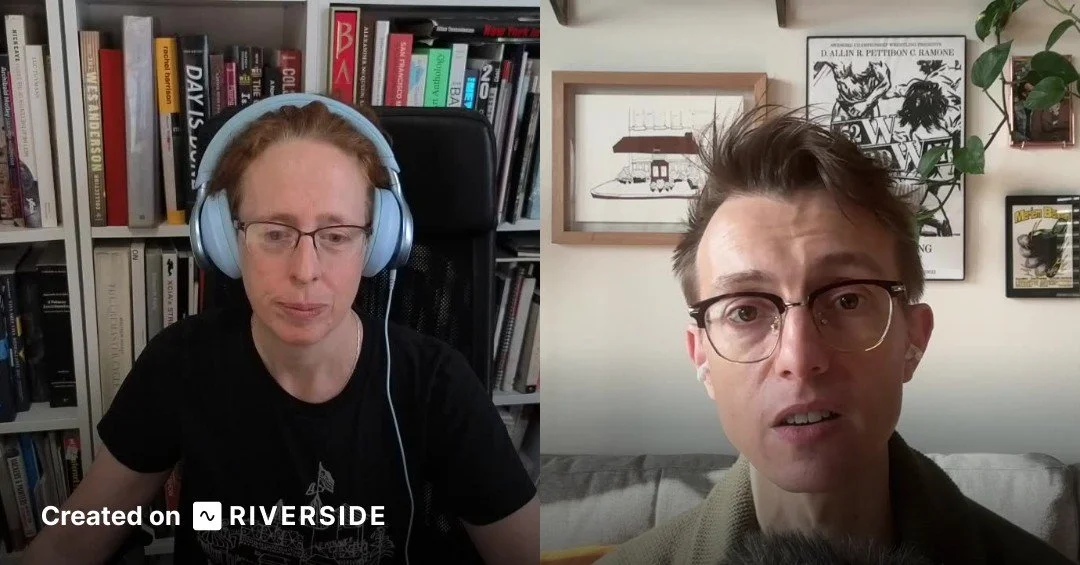
Left Paddy Johnson, Right Tim Schneider
In this episode, Paddy talks with art market analyst Tim Schneider about the New Visions Report 2025, a survey of over 1,000 visual artists about their working conditions.
They discuss why even successful artists struggle with money, what separates artists who advance in their careers from those who don't, and the business practices that matter most.
Tim shares insights from two decades covering the art market about networking, professional systems, and why the infrastructure around your art practice is just as important as the work itself.
Podcast Episode 103:
You are listening to the Art Problems Podcast, episode 103. I'm your host, Paddy Johnson. This is the podcast where we talk about how to get more shows, grants and residencies. This is our last episode before we break for the holidays, and I really wanted to make it count.
We just released the New Visions Report 2025, a major survey reflecting on the working conditions of 1,000 visual artists this year. To help me make sense of what we found, I brought in Tim Schneider, an art market analyst who has been covering the business side of art for two decades and who authored much of the report with me.
What surprised us most? Even the highest-achieving artists in our survey are struggling with money. We dig into why that is, what separates artists who advance from those who don’t, and the one thing Tim thinks every artist should focus on to build a sustainable career. Spoiler alert: it has nothing to do with what happens inside your studio.
Alright, let’s get into it.
Paddy Johnson: Hi Tim, welcome to the show.
Tim Schneider: Hey Paddy, thanks for having me.
Paddy Johnson: I wanted to have you on the show because you authored a lot of the New Visions Report, which we just released. One of the reasons I wanted to work with you is because you have so much experience covering the art market from a business perspective. What surprised you most about the findings?
Tim Schneider: The biggest surprise for me was how even the highest-achieving artists still listed financial pressure as a major part of their day-to-day lives. When we break the data down by career tier, even the group we call Zenith artists overwhelmingly said money was their biggest challenge.
I didn’t expect that level of consensus. I never thought making art was easy financially, but seeing that even artists at the top still feel that pressure was striking.
Paddy Johnson: That really resonated with me. I’ve heard similar things from nonprofit leaders—that bigger budgets don’t eliminate financial stress, they just change its shape. It feels like artists experience something similar.
Tim Schneider: Exactly. And it’s important to note that when Zenith artists say money is a challenge, it doesn’t always mean the same thing as it does for emerging artists. But what really stood out was that 59% of Zenith artists said debt influences their decisions. That tells us this isn’t just lifestyle comparison—it’s real financial pressure.
Paddy Johnson: One thing I wanted to explore with this survey was how market contraction over the last year compares to the optimism we saw around Art Basel. From your perspective, do those things connect?
Tim Schneider: If we zoom out, I think people sometimes focus too much on year-to-year changes instead of longer trends. I’ve been going to Miami Art Week since 2013, and honestly, more of it feels the same than different. The structure, the concerns, and the dynamics haven’t fundamentally shifted.
One thing that aligns strongly with the survey is that artists, at every level, still want the same things: more opportunities with galleries and institutions. Those priorities dominated the responses, which shows how traditional the art world still is.
Paddy Johnson: That consistency shows up in the income data too. Adjusted for inflation, artist earnings have been flat for years. It really emphasizes how important it is to look at long-term patterns.
Tim Schneider: Absolutely. Artists’ core desires haven’t changed much over time. Physical exhibitions in galleries and museums are still the gold standard, and that’s clearly reflected in the survey.
Paddy Johnson: One encouraging stat was that 73% of artists said they were optimistic about their futures. What’s your take on that?
Tim Schneider: I think optimism is almost a requirement for choosing this career. You have to believe you’ll beat the odds. But it’s worth noting the survey asked artists only about themselves. If you asked how they feel about their peers’ futures, tellingly, the answers might be far less optimistic.
Paddy Johnson: That’s such a good point. Artists might define their career as simply being able to keep making work, which changes what optimism means.
Tim Schneider: Exactly. And that’s what makes this survey valuable. We rarely hear directly from artists about how they experience the industry.
Paddy Johnson: One last question. If artists could focus on just one area of the business side, what should it be?
Tim Schneider: Relationship building. Networking pays dividends you can’t always see immediately, but it’s essential. You have to be an active participant in your own rescue. If you don’t advocate for yourself, no one else will do it as strongly.
Paddy Johnson: I couldn’t agree more. So many business tasks ultimately tie back to relationships. That’s what makes this work challenging, but also meaningful.
Thank you so much, Tim, for joining me and for your work on the New Visions Report. And thank you to everyone listening. Happy holidays, and I’ll see you in the new year.
If you like the show, please leave a review and share it with a friend. It really helps get this information out to more artists. You can find all referenced names and links at vvrkshop.art/podcast.
Paddy