Art Problems in Hyperallergic: How Do I Get Into the Whitney Biennial?
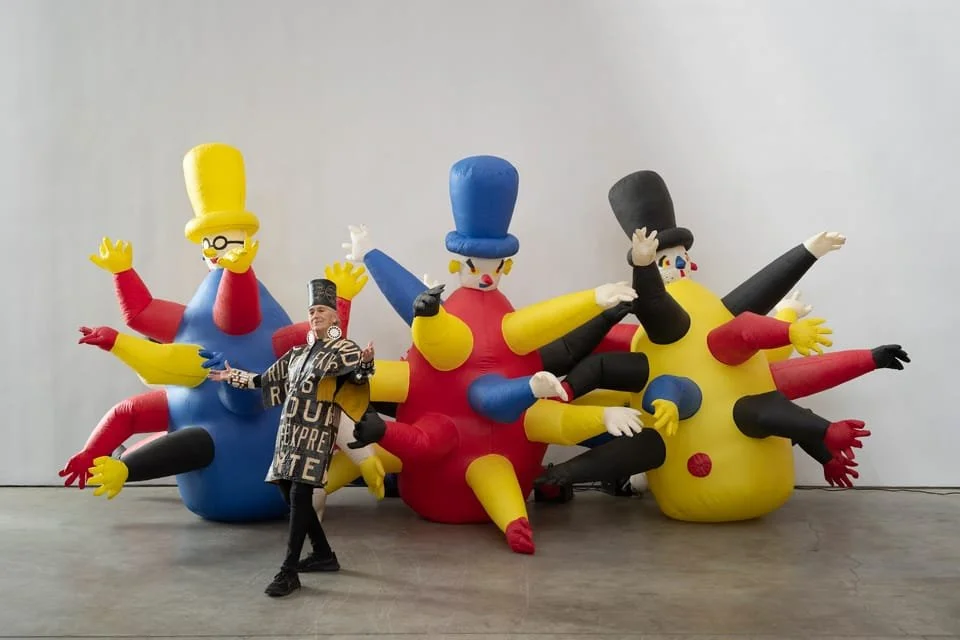
Pat Oleszko with "The Trojan Horse" (1987), nylon and blower, in her forthcoming exhibition at SculptureCenter in Queens (photo by Charles Benton, courtesy the artist; SculptureCenter, New York; and David Peter Francis, New York)
In my latest Art Problems column for Hyperallergic, I write about how artists can get selected for the Whitney Biennial.
I’d love to be considered for the Whitney Biennial, but getting into it — even better! How does an artist get these curators into their studio? What can I expect after that? Can I do anything to improve my chances? —Longing for the Whitney
Many artists have these questions, but few share them with me. Conventional wisdom has such sway: Make good work. Hang out with the right people. Be charming in the studio and wait for your call from the curators.
In short, conventional wisdom says there isn’t much you can do beyond spending time in your studio and employing shrewd social calculation. While there’s a grain of truth in that, it’s not the whole story.
Before getting into what you can do, ask what the biennial means to you and how that aligns with your career. Do you want to participate because it is the most recognized exhibition in the United States? Most artists would concede that’s part of it.
When I spoke with performance artist and 2026 Whitney Biennial participant Pat Oleszko, she described the event as one everyone knew of, even if they weren’t in the art world. To illustrate this, she described protestors at the No Kings rally in New York earlier this month who learned that the costumes she and her friends were wearing were made by a Whitney Biennial artist. She recalled, “I watched the wave of biennial recognition flow down the street” as people said, “Oh, she’s a biennial artist!”
Many assume inclusion is an endorsement of the work’s quality, which can further an artist’s career. But your art needs to speak to the biennial curators and align with cultural interests. Often, the work selected has a kind of buzz around it that is impossible to engineer.
To read the full piece, complete with practical tips and strategies, head to Hyperallergic.